Iron Remover for Cars | Deep Clean Wheels & Paint
Every car owner has felt it — that gritty, sandpaper-like touch on the paint, just days after a wash. You slide your palm over the hood expecting that glass-smooth kind of perfection,…
Every car owner has felt it — that gritty, sandpaper-like touch on the paint, just days after a wash. You slide your palm over the hood expecting that glass-smooth kind of perfection, and instead you feel tiny bumps everywhere. That texture isn’t dirt. It’s iron.
Brake dust, rail dust, and industrial fallout show up on your car every day, even if it’s sitting in a garage or you’re doing a cross-country drive. Regular soap and water don’t really deal with it, because these bits don’t just sit on top of your paint. they bond to it. Then, over time they oxidize, rust, and etch those small orange specks right into your clear coat.
This is exactly where an iron remover for cars starts earning serious respect, like one of the most useful things in a detailer’s kit. Not some fancy extra, not a “nice to have.” It’s the line between a car that merely looks clean… and a car that is actually clean.
In this guide, we’ll cover what an iron remover for cars does, why it matters, how to use it the right way, and also why Magic Auto Care’s formula has become a trusted pick for both weekend detailers and professional shops.
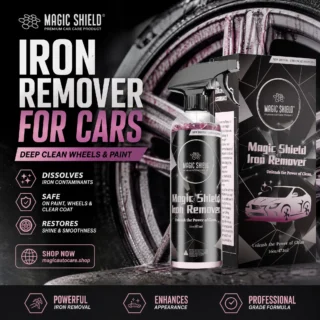
What Is an Iron Remover for Cars?
An iron remover for cars is a specialized decontamination spray made to dissolve and pull off ferrous, iron-based particles that have clung to your car’s paint, wheels, glass, and trim. Think brake dust, rail dust from train transport, and that airborne metal residue from industrial zones or even highway construction.
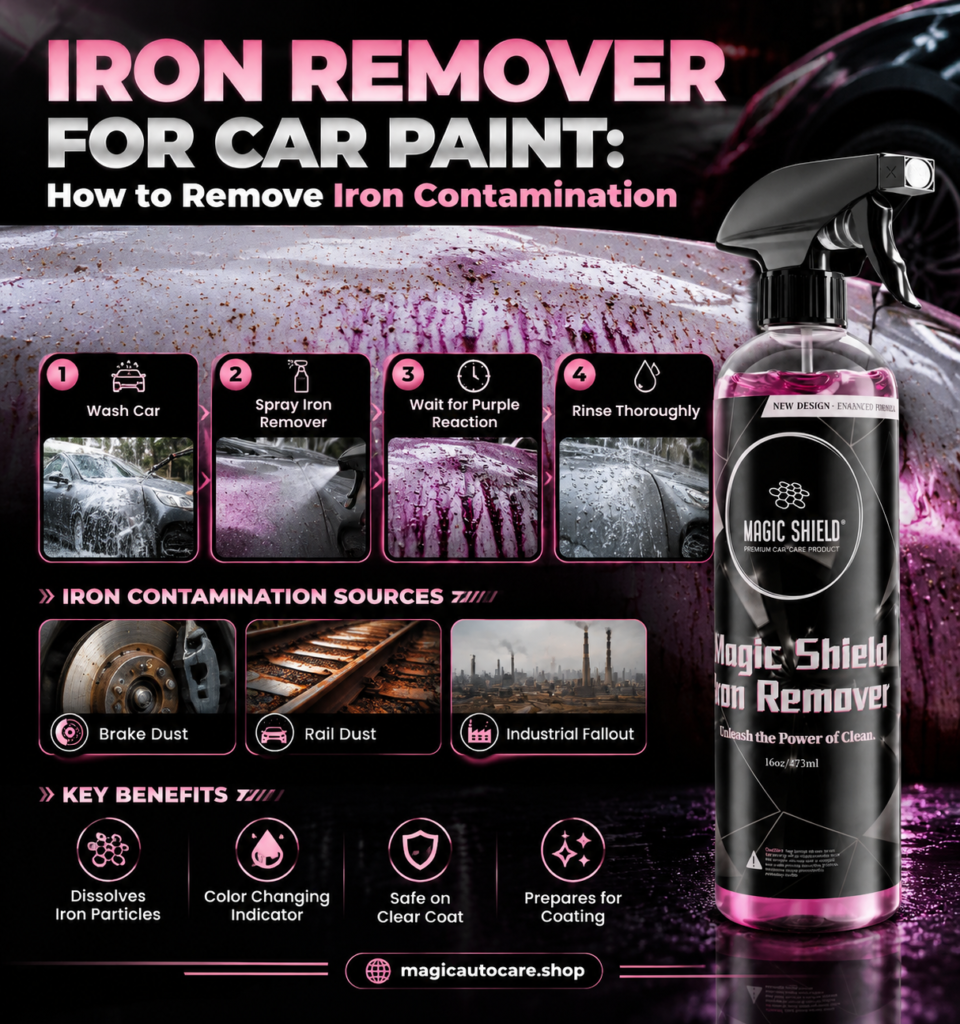
Unlike a standard car shampoo, which only removes loose surface dirt, a car iron remover chemically reacts with embedded metal particles. Most formulas use a bleeding agent that changes color — typically shifting from clear or purple to a deep red or orange — as it breaks down iron on contact. That color change isn’t just for show. It’s visual proof that the product is working and pulling contamination out of your clear coat.
This category of product is sometimes called:
- Iron fallout remover
- Fallout remover for cars
- Wheel iron remover
- Decontamination spray
They’re all describing the same core function: dissolving bonded iron contamination so it can be safely rinsed away instead of sitting there, slowly damaging your paint.
How It’s Different From Usual Car Soap
Regular car soap is made to lift stuff like dirt, oil, and road grit that’s hanging out on top. So yeah, it’s mainly a physical clean process . But an iron remover does something else it starts a chemical reaction. Instead of just washing away what sits on the surface, it goes after the iron bond itself, breaking the particle down so it lets go from the clear coat, and doesn’t keep spreading around like a bad idea.
Why Iron Contamination Hurts Your Vehicle
Iron particles are pretty sharp, metal-like, and they react chemically. When they land on your paint and you don’t remove them, a few problems start stacking up
First, rusting begins fast. Iron will oxidize when moisture is around, and the rust reaction happens right on your clear coat.
Then micro-etching shows up. As the particle rusts, it swells just a bit and it can make a tiny pit in the paint surface.
During washing it spreads. If a wash mitt, or a towel really, drags over iron that’s embedded, it can scratch because you’re basically pulling metal bits across a softer clear coat.
And wheels get the worst of it. Since brake dust is created right at the wheel, alloy wheels take the most frequent and strongest hit from iron contamination, compared to the rest of the car.
If you leave it too long, those little orange specks start becoming obvious, and you can see them with the naked eye, especially on lighter colors. Once it’s at that stage, no amount of washing, or a quick wax job, will actually undo it. The damage is already sitting inside the finish.
Real-Life Example
Imagine a car that’s driven every day on the highway, and it only gets washed weekly with soap and a hose. It looks fine, clean in a kind of “good enough” way. But then you run your hand over the hood, and it feels kinda like fine sandpaper. That texture is iron fallout that’s been collecting for months, hidden until you touch it, or until you use an iron remover that reveals what’s there.
Signs Your Vehicle Needs an Iron Remover
Maybe you’re not totally sure if the car needs a special decontamination thing, right? So don’t guess, check for a few cues like:
A rough, gritty texture when you run a hand across the paint after washing and rinsing
Orange, rust colored specks showing up on the wheels especially near the outer barrel
Dull, hazy paint that never really pops again even after waxing
Water spots that seem stuck in place, and won’t polish out with regular cleaner or normal wax
Wax , or sealant not really staying put , like it slides off or wears away way too fast
Discoloration on light colored wheels, often like a thin rust sheet film sort of look
Paint that feels sticky or tacky even after a full wash, dry, and you swear it’s clean
If 2 or more of these sound familiar, then yeah, it’s a pretty solid sign your vehicle is overdue for an iron remover treatment.
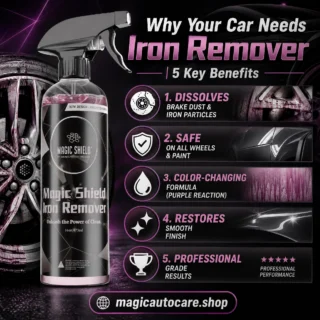
Benefits of Using an Iron Remover
Using a dedicated iron remover for cars isn’t only for “pretty.” It also helps protect what you paid for. It does stuff like:
Brings back real paint smoothness by removing embedded contamination, not just surface grime
Helps stop rust and tiny etching before it turns into damage you can’t ignore
Boosts gloss and depth because light reflects more evenly off clean , decontaminated paint
Helps extend the lifespan of wax, sealants, and ceramic coatings since they stick better to a clean surface
Gets wheels actually clean, not just “wiped clean,” by dissolving baked-on brake dust buildup
Cuts down the need for heavy clay bar work, which can be a bit too rough if you overdo it
Improves overall safety around chrome and trim, because a good formula stays gentle across multiple materials
And if you’re planning to install a ceramic coating, iron remover for cars this step isn’t optional, it’s core prep. Ceramic coatings bond to the real paint surface, and if iron particles are still hanging around, the coating will essentially trap that contamination in place forever.
How Iron Remover Works
The science behind an iron remover for cars comes down to a targeted chemical reaction. Most formulas rely on an active ingredient that specifically bonds with iron oxide molecules.
Here’s the general process:
- Contact: The spray is applied to a cool, shaded panel and left to dwell.
- Reaction: The active chemical binds with iron particles, breaking the metallic bond holding them to the clear coat.
- Bleeding: As the reaction happens, the product visibly changes color (commonly to red, orange, or dark purple), showing exactly where iron contamination exists.
- Release: The now-loosened particles lift away from the paint surface.
- Rinse: A thorough rinse with a pressure washer or hose carries the dissolved particles safely away.
This is why color-changing iron removers are so popular — the visual feedback tells you precisely how contaminated a panel or wheel really is, which is incredibly useful for tracking results over multiple washes.
Which One Should You Use?
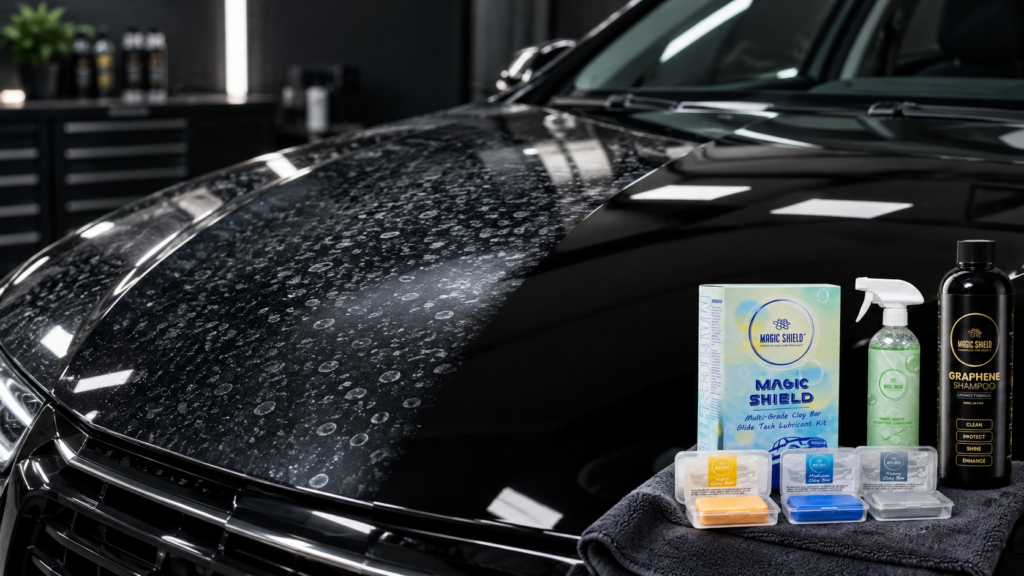
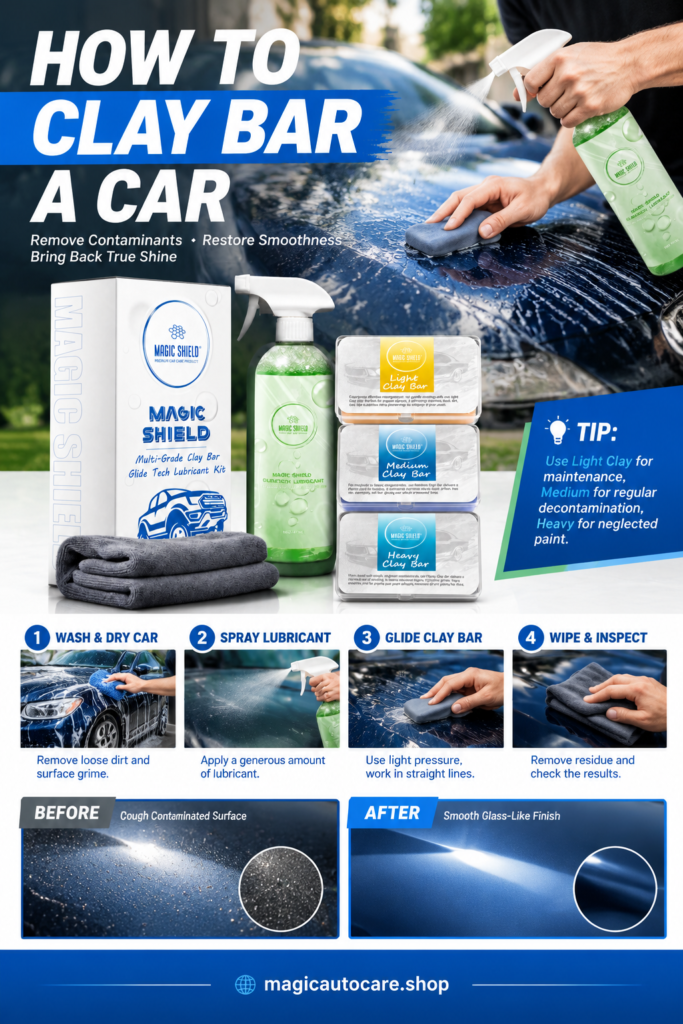
The honest answer:iron remover for cars both, in sequence. Start with an iron remover spray to chemically dissolve metallic contamination, then follow with a clay bar if there’s still texture from tar, tree sap, or overspray. Using iron remover first also reduces the risk of dragging sharp iron particles across your paint with the clay bar, which can otherwise cause fine scratching.
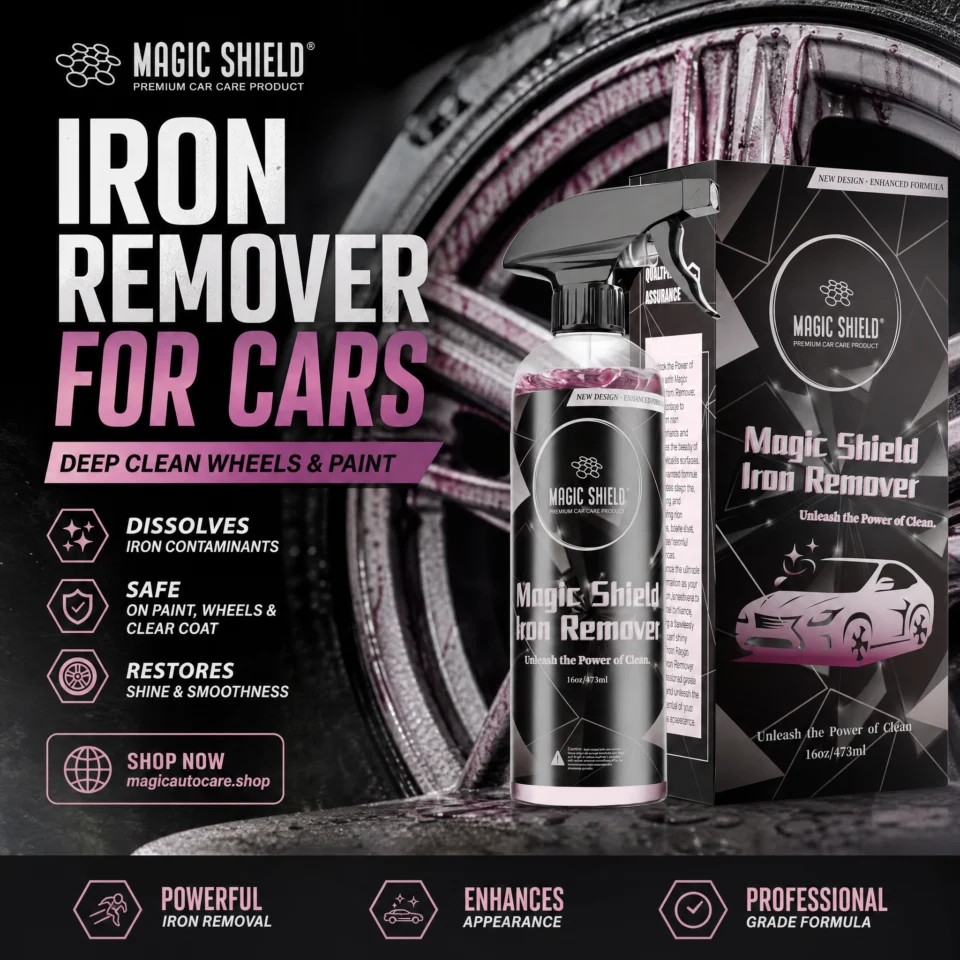
Why pick Magic Auto Care Iron Remover
So at Magic Auto Care, our iron remover spray was made basically for folks who care about doing it right, you know—whether you’re a professional detailer running through a dozen cars a day or you’re just a car owner who wants that weekend wash to actually matter.
What makes it different is pretty simple, but still important:
It has a fast, visible color-changing formula so you can tell where the contamination is doing its thing and getting lifted
It’s safe on paint, wheels, glass, and chrome, so really one bottle can cover the entire vehicle
It’s pH-balanced, to help protect clear coat and factory finishes
It works great as a pre step before ceramic coating prep, so coatings can bond to paint that’s genuinely clean
The trigger spray is easy, no awkward mixing, no “let me guess” dilution
It’s made for both DIY detailers and professional shops
We made this product because it was getting old seeing customers lay down wax on contaminated paint, basically trapping the problem instead of correcting it. A real iron decontamination spray should be step one in any detailing routine, not something you remember later or treat like an after thought.
FAQs:
1. What does an iron remover actually do to a car?
Ans: It basically chemically unclips embedded iron particles, like brake dust or rail dust, that are stuck onto your paint, wheels, and glass. So instead of those spots just hanging around, later you can rinse them off safely, and you avoid rust spots or paint etching, you know that kind of unpleasant thing.
2. Is iron remover safe for every single car paint type?
Ans: In general most well made iron removers are compatible with clear coat finishes, but it’s still worth doing a quick spot-test on a small, out of the way area first. Especially with matte paint, or specialty finishes where behavior can be a bit… particular.
3. How often should iron remover show up in my routine?
Ans: For most daily driven cars, using it every 2–3 months is usually enough. If your car is often in heavy traffic, near railways, or in industrial zones, then monthly is more realistic, because iron fallout tends to build up faster there.
4. Can I use iron remover on wheels only, or the whole car?
Ans: You can do wheels only if you want, but the product is usually designed for the whole car too—paint, glass, wheels, and most chrome trim. iron remover for cars That’s why it feels like one of those versatile detailing solutions you keep coming back to.
5. What is the difference between iron remover and brake dust remover?
Ans: Honestly they’re often the same category of product. Brake dust is basically iron fallout, so an iron remover spray is formulated to handle it, plus other iron based contamination as well.
6. Why does iron remover turn purple or red when sprayed?
Ans: That color shift is the bleeding reaction. It means the chemical is actively breaking the bond between the iron particles and the paint or wheel surface. If it gets darker, usually there was more contamination present, so more reaction.
7. Do I need to follow iron remover with a clay bar?
Ans: Not always, no. If after rinsing the paint feels smooth, you’re probably good. But if you still notice texture, a clay bar step can pick up leftover tar, sap, or bonded debris that iron remover doesn’t really target.