Can You Put Ceramic Coating on Leather Seats?
Ceramic coating can help smooth, finished leather seats resist spills, staining and dye transfer. Here's how to check your seats, apply it and care for it.
Yes. Ceramic coating on leather seats works when the seats are smooth, finished automotive leather that’s still in good shape. A coating made for leather can help those seats resist spills, staining, dye transfer from jeans and everyday wear, and it makes routine cleaning easier. It won’t repair cracks or peeling, and it isn’t meant for suede, nubuck, Alcantara or unfinished leather.
The catch is in that first sentence. “Leather” covers several different materials in a modern car, and a few of them shouldn’t get a coating at all. So this guide starts with the step most people skip: working out what your seats are actually made of.
What a leather ceramic coating does
Smooth car leather typically leaves the factory with a finish: a pigmented color coat with a clear topcoat over the hide. According to the Leather Dictionary’s entry on leather finishes, that finish is what makes leather more durable, more stain resistant and easier to clean than unfinished leather.
A leather ceramic coating goes on as a very thin layer over that factory finish and cures in place. The goal is extra protection on top of the finish, so spills, grime and denim dye have a harder time getting into it. If you’re shopping for a ceramic coating for leather seats, pick one that’s labeled for leather, not a paint coating, and make sure it comes with clear prep, application and cure directions.
Here’s where it can help:
- Coffee, soda and other spills that you wipe up before they sit
- Blue dye from new jeans, which shows up fast on beige, light gray and white seats
- Everyday grime on bolsters, armrests and the seat edges you slide across
- Easier wipe-downs during regular cleaning
And here’s what it won’t do:
- Repair cracks, tears, peeling or rubbed-through color
- Bring back faded or worn leather
- Make leather stain-proof. Spills still need wiping up.
- Replace any care your vehicle maker recommends
Check your seats before you coat them
This is the part that decides whether a coating is a good idea, so it’s worth ten minutes.
How to tell what your seats are made of
Start with the paperwork. The owner’s manual, window sticker or build sheet lists the upholstery, and a dealer can look it up from your VIN. Watch for brand names: many automakers sell synthetic seat material under their own labels, such as Mercedes-Benz MB-Tex, BMW Sensatec and Toyota SofTex, and those materials aren’t leather.
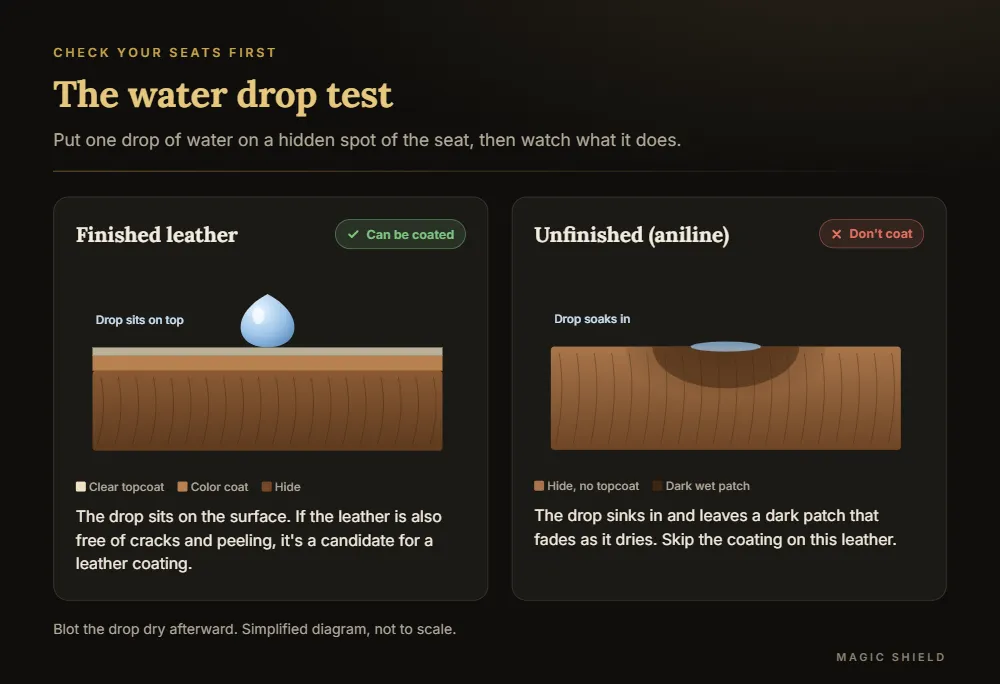
Then do a drop test in a spot nobody sees, like the lower side of the seat base. Put one drop of water on the leather and watch it. On unfinished (aniline) leather, the drop soaks in and leaves a dark patch that fades as it dries, a check Furniture Clinic describes in its guide to aniline leather. On finished leather, the drop sits on the surface. Blot it dry afterward either way.
Finally, look and feel. Suede, nubuck and Alcantara have a soft, brushed nap that changes shade when you run your hand across it. Smooth leather doesn’t.
Which seats suit a leather coating
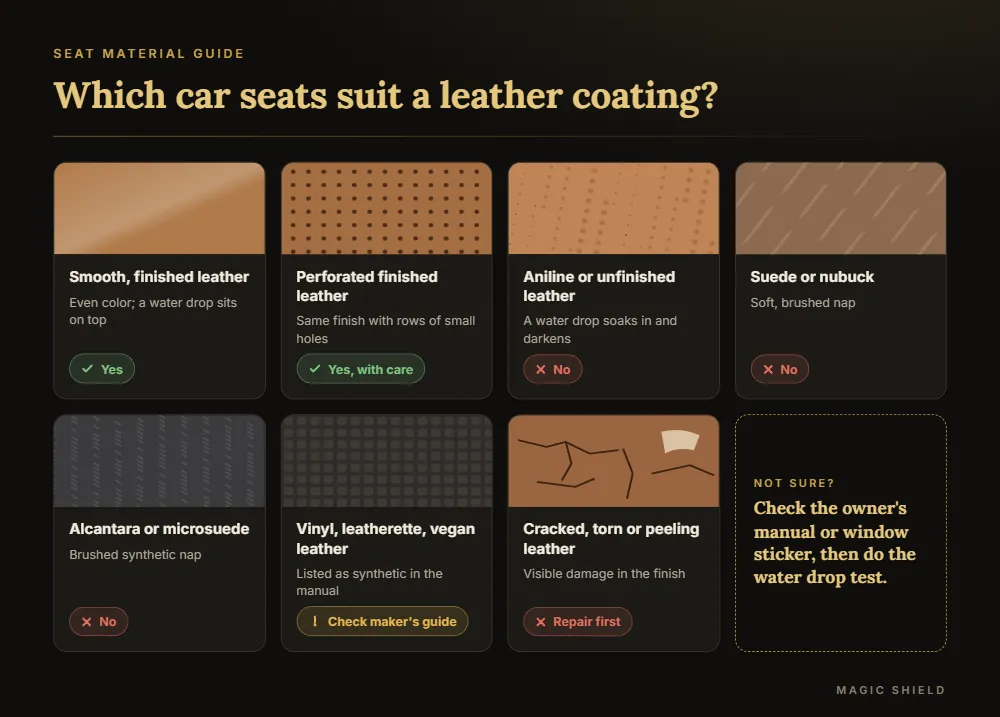
| Seat material | How to recognize it | Use a leather ceramic coating? |
|---|---|---|
| Smooth, finished leather | Even color; a water drop sits on top | Yes, if it isn’t cracked, torn or peeling |
| Perforated finished leather | Same finish with rows of small holes | Yes, with care. Keep product out of the holes (step 6 below). |
| Aniline or other unfinished leather | A water drop soaks in and darkens the spot | No |
| Suede or nubuck | Soft, brushed nap | No |
| Alcantara or microsuede | Brushed synthetic nap, often on inserts and steering wheels | No |
| Vinyl, leatherette or “vegan leather” | Listed as synthetic in the manual or on the sticker | Don’t assume it’s compatible. Check the vehicle maker’s care guide first. |
| Cracked, torn or peeling leather | Visible damage in the finish | No. Get it repaired first. |
The honest downsides
Leather coatings have critics, and some of their points are fair.
It can change the look slightly. Anything that sits on the surface can shift the sheen a little, and you’ll notice it most on matte leather. Test a hidden spot first and check it in daylight once it’s buffed and dry.
It won’t help worn seats. A coating over cracks or rubbed-through color won’t hide them. A seat in that condition needs a repair, and a coating comes later, if at all.
Too much product causes problems. Finished car leather already has a coated surface, and the Leather Dictionary notes that a thick finish can make leather feel firmer and less breathable. That’s the reason the instructions call for a very thin coat that’s buffed off completely. Heavy coats are harder to level and more likely to look or feel different from the rest of the seat.
It takes the car out of service. The coating needs at least 4 hours to cure, and overnight is better.
It wears. Friction is what wears any protective layer, so the spots you rub most, like the driver’s outer bolster, will wear first.
Future repairs need a heads-up. If the seat ever needs a repair or recolor, tell the upholsterer it’s been coated so they can prep the surface for their products.
Coating vs. conditioner vs. quick protectant
People often lump these together, but they do different jobs.
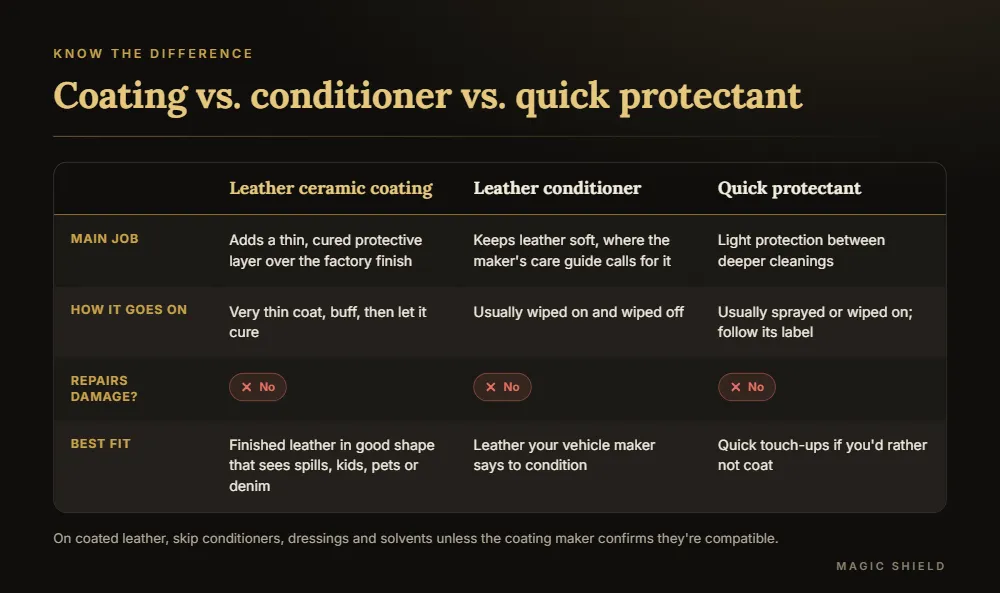
| Leather ceramic coating | Leather conditioner | Quick leather protectant | |
|---|---|---|---|
| Main job | Adds a thin, cured protective layer over the finish | Keeps leather soft, where the maker’s care guide calls for it | Light protection between deeper cleanings |
| How it goes on | Very thin coat, buff, then cure for at least 4 hours | Usually wiped on and wiped off | Usually sprayed or wiped on; follow its label |
| Repairs damage? | No | No | No |
| Best fit | Finished leather in good shape that sees spills, kids, pets or denim | Leather your vehicle maker says to condition | Quick touch-ups if you’d rather not coat |
Can you stack them? Not without checking. On coated leather, avoid conditioners, dressings and solvents unless the coating maker confirms they’re compatible.
How to apply ceramic coating to leather seats
Plan for an unhurried session plus an overnight cure. You’ll need:
- A vacuum with a soft brush attachment
- A leather cleaner (approved for your leather)
- An applicator
- Two clean, dry microfiber towels
- Gloves
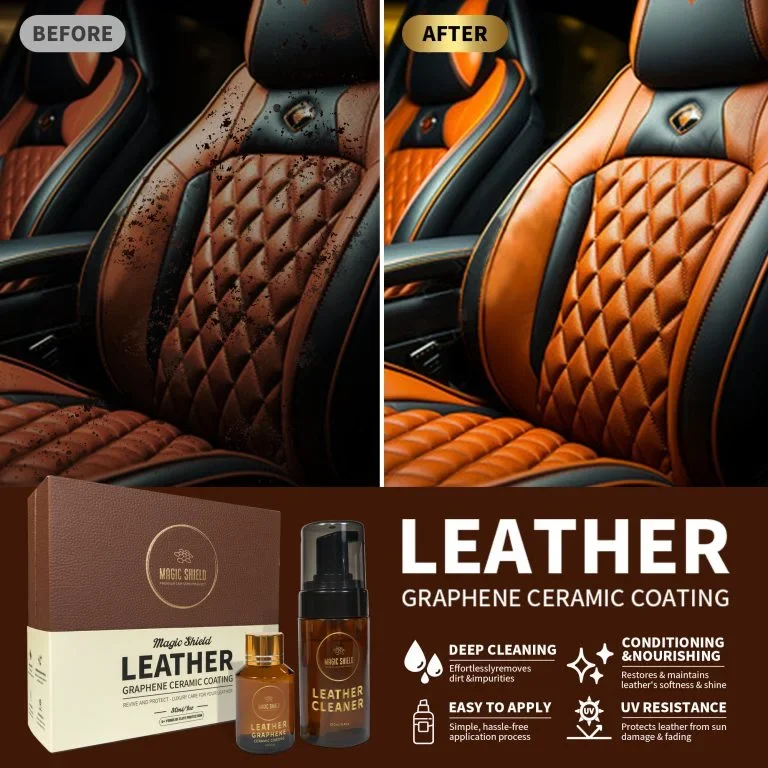
The Magic Shield Leather Graphene Ceramic Coating kit includes the coating, a 100 ml (3.4 oz) leather cleaner, an applicator, a towel and gloves, so the only extra item is a second microfiber for the final buff.
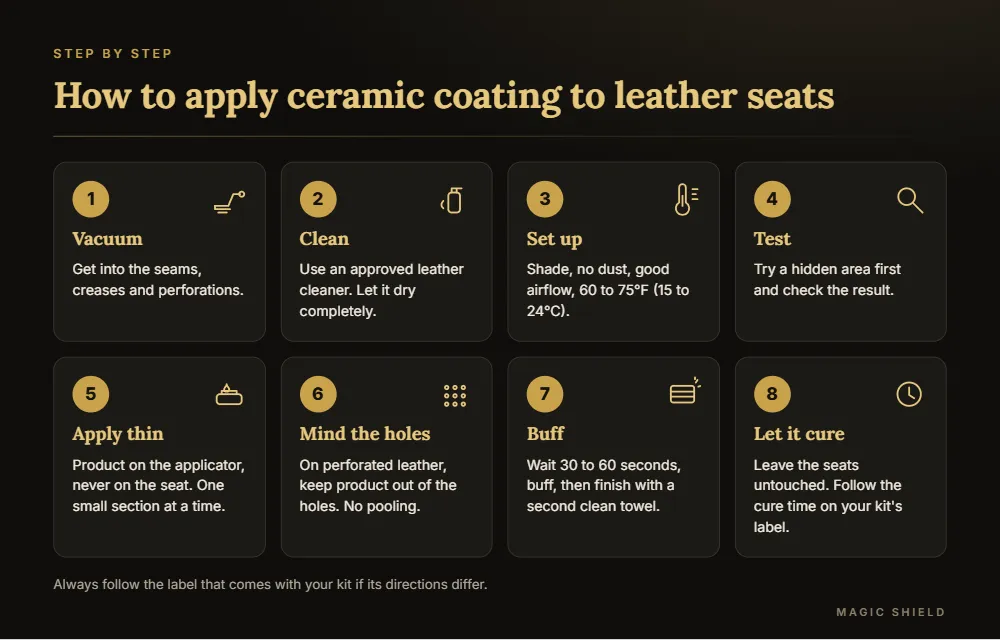
- Vacuum the seats, including seams, creases and perforations.
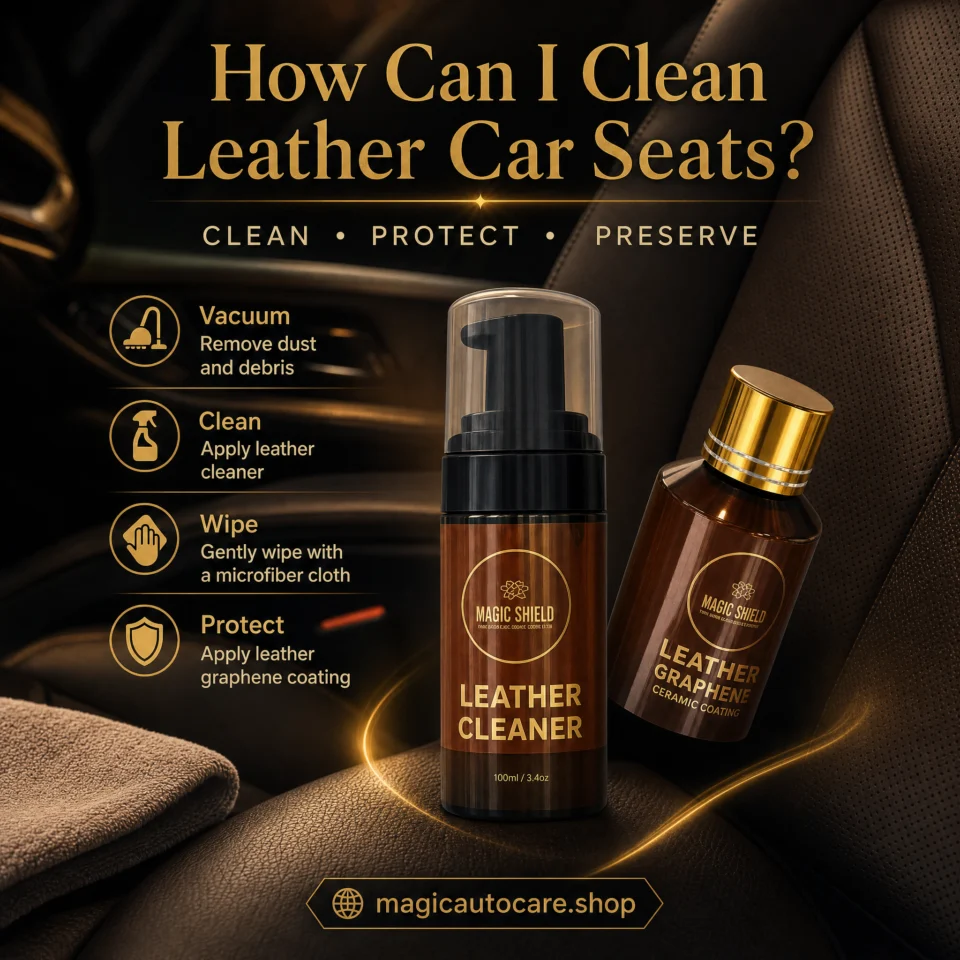
- Clean the leather with an approved leather cleaner, then let it dry completely. Our guide on how to clean leather car seats walks through this step.
- Work in the right spot: shaded, dust-free and well ventilated, at 60 to 75°F (15 to 24°C).
- Test a hidden area and check the result before you do the whole seat.
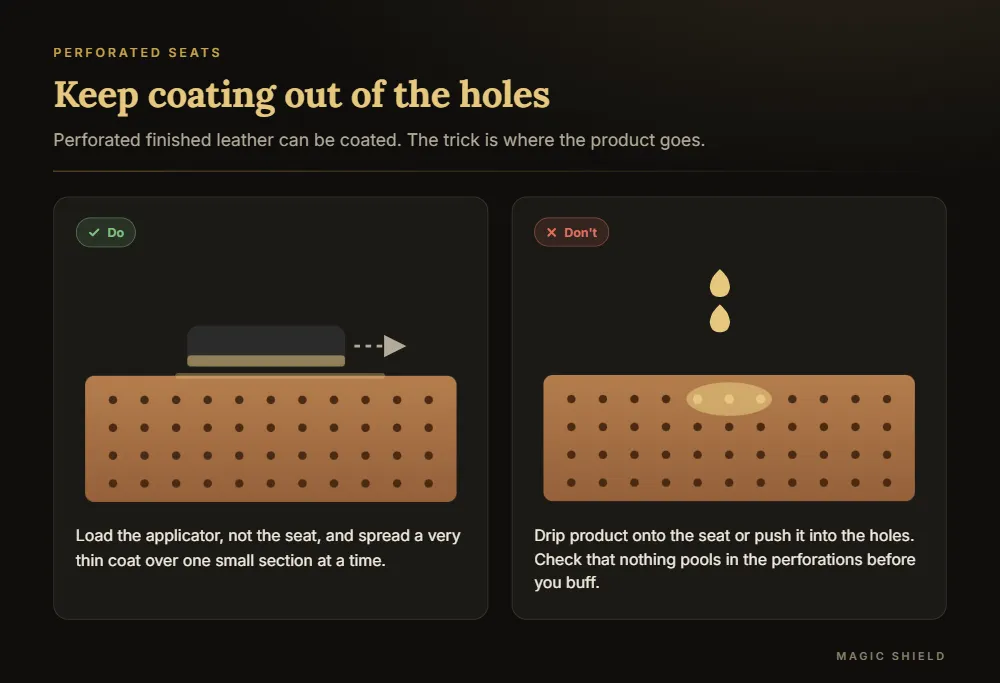
- Put a small amount of coating on the applicator, not on the seat, and spread a very thin, even coat over one small section at a time.
- On perforated leather, keep the product on the applicator and don’t push it into the holes. Check that nothing pools in the perforations.
- Wait 30 to 60 seconds (a little longer in cool weather), then buff with a clean, dry microfiber. Finish with a second clean towel.
- Let it cure for at least 4 hours, and overnight if you can. Until then, don’t touch, sit on, wet, clean or rub the seats. Follow the label that comes with your kit if it gives different directions.
Start somewhere forgiving, like a rear seat or the back of a front seat. By the time you reach the driver’s seat, you’ll have a feel for how little product a section needs.
How to care for coated leather
Coated seats still need cleaning, just with a lighter touch.
- Clean with a gentle, leather-safe cleaner and a soft microfiber towel.
- Wipe up spills soon instead of leaving them to sit.
- Don’t soak seams or perforations.
- Skip stiff brushes, scrub pads and hard scrubbing.
- Keep dressings, conditioners and solvents off the seats unless the coating maker confirms they’re compatible.
For a fuller routine, see our guide to leather car seat care.
DIY or professional?
Ceramic coating for leather car seats is a realistic DIY job when your seats are finished leather in good condition and the car can sit overnight. The work itself is cleaning, wiping and buffing. The hard part is patience: small sections, thin coats and a full cure.
A professional detailer is worth a call if you can’t confirm what the material is or you’d rather not do the prep yourself.
If the seats are cracked, torn or peeling, the first call goes to a leather repair specialist or upholsterer. Once the seat is repaired, ask them whether a coating suits the repaired finish.
Is ceramic coating on leather seats worth it?
It’s usually worth it if:
- You have light-colored seats and wear dark denim
- Kids, pets or frequent passengers ride in the car
- The car is newer and you plan to keep it
- You’d rather wipe seats clean than scrub them
It probably isn’t worth it if:
- The leather is already cracked, peeling or worn through
- The seats are unfinished leather, suede, nubuck or Alcantara
- You can’t confirm whether a synthetic material is compatible
For smooth, finished leather in good shape, a coating is a practical way to make everyday messes easier to handle. For anything else, identify or repair the material first.
Leather ceramic coating FAQs
Can you put ceramic coating on leather seats?
Yes, on smooth, finished automotive leather in good condition. Use a coating made for leather, clean the seats first, test a hidden spot and apply a very thin coat. Don’t use it on suede, nubuck, Alcantara, unfinished leather or damaged leather.
Is there a downside to ceramic coating leather?
It won’t fix existing damage, it can slightly change the sheen, and the seats need at least 4 hours to cure. Heavy coats are also harder to buff evenly. Test a hidden area first, and tell an upholsterer about the coating before any future repair.
Will ceramic coating fix cracked or peeling leather?
No. A leather coating is a protectant, not a repair. Have cracked, torn or peeling leather repaired by a leather specialist or upholsterer first.
Can I use it on perforated leather seats?
Yes, if the leather is finished and in good shape. Put the product on the applicator instead of the seat, use very little and don’t push it into the holes. Make sure nothing pools in the perforations before you buff.
Will it change the look or feel of my leather?
It can change the sheen slightly, especially on matte leather. Test a hidden spot and check it in daylight after buffing. A very thin coat and a full buff keep any difference to a minimum.
How long before I can sit on the seats?
Wait at least 4 hours, and overnight is better. Until then, don’t touch, sit on, wet or clean the seats. Follow the cure time on the label that comes with your kit.
Can I use it on vinyl or vegan leather?
Don’t assume it’s compatible. Identify the material from the owner’s manual or window sticker, then check the vehicle maker’s care guide before you apply any coating to synthetic upholstery.
How do I clean leather after coating it?
Use a gentle, leather-safe cleaner and a soft microfiber towel. Don’t soak seams or perforations, skip abrasive scrubbing, and avoid dressings or solvents unless the coating maker confirms they’re compatible.
Ready to protect your seats?
If your seats passed the checks above, the Magic Shield Leather Graphene Ceramic Coating kit includes 30 ml (1 oz) of leather coating, 100 ml (3.4 oz) of leather cleaner for prep, an applicator, a towel and gloves. Still not sure about your seat material? Read our leather coating FAQs or contact us before you buy.