How to Restore Faded Car Paint: A Safe Step-by-Step Guide
An automobile might give the impression of being much older due to the paint losing its luster. The hue or color would look faded, reflections are cloudy, certain panels appear lighter, and…
An automobile might give the impression of being much older due to the paint losing its luster. The hue or color would look faded, reflections are cloudy, certain panels appear lighter, and the finish looks old even after a wash. Learning how to restore faded car paint starts with understanding why that shine disappeared.
If you are looking for how to restore faded car paint, the first thing you need to figure out is why the paint is faded. Sometimes the reason is light oxidation or surface dullness, which could be repaired with proper paint preparation and polishing. Other times, there might be peeling or damage to the clear coat, which requires professional refinishing rather than just using another cleaning product.
The good news is not every faded finish requires repainting. With the right inspection and proper procedures, the appearance of the right paint could be improved and most of its gloss returned. For many cars, how to restore faded car paint safely comes down to inspection, gentle correction and protection.
The guide shows how to understand the condition of your paint and what can be safely done at home. In short, this is how to restore faded car paint safely at home.
How to choose the right products without expecting a polish or coating to repair damage it cannot fix.
Why Does Car Paint Become Faded or Dull?
The paint of the vehicle is subjected to the sun, weather, dirt from the road, washing solutions, and regular environmental factors. Eventually, all these factors affect the appearance of the paintwork, which may become less clear and glossy.
Here are some of the common reasons why the paint on a car may become dull. Knowing them is the first step in learning how to restore faded car paint.
1. Prolonged Sun Exposure
UV rays and heat can gradually deteriorate automotive finishes. Vehicles that remain outside for an extended period develop dull, uneven paint, especially on the horizontal areas of the car like the roof, hood, and trunk. For a photo-based walkthrough of the same process, see wikiHow’s guide to restoring sun-damaged car paint.
2. Paint Oxidation
One of the leading causes of faded color or a chalky finish is oxidation. The frontal color isn’t as bright anymore, and the paint seems more washed–out. Light oxidation or surface weathering can be corrected through proper polishing if the paint system is still intact. Nevertheless, it is impossible to polish the badly damaged clear coat.
3. Improper Washing and Drying
The use of dirty sponges or rough towels, automatic car washes, or bad washing techniques may result in fine surface scratches. The scratches reflect the light that causes dullness of paint because of the scattering of light rays.
4. Environmental Contamination
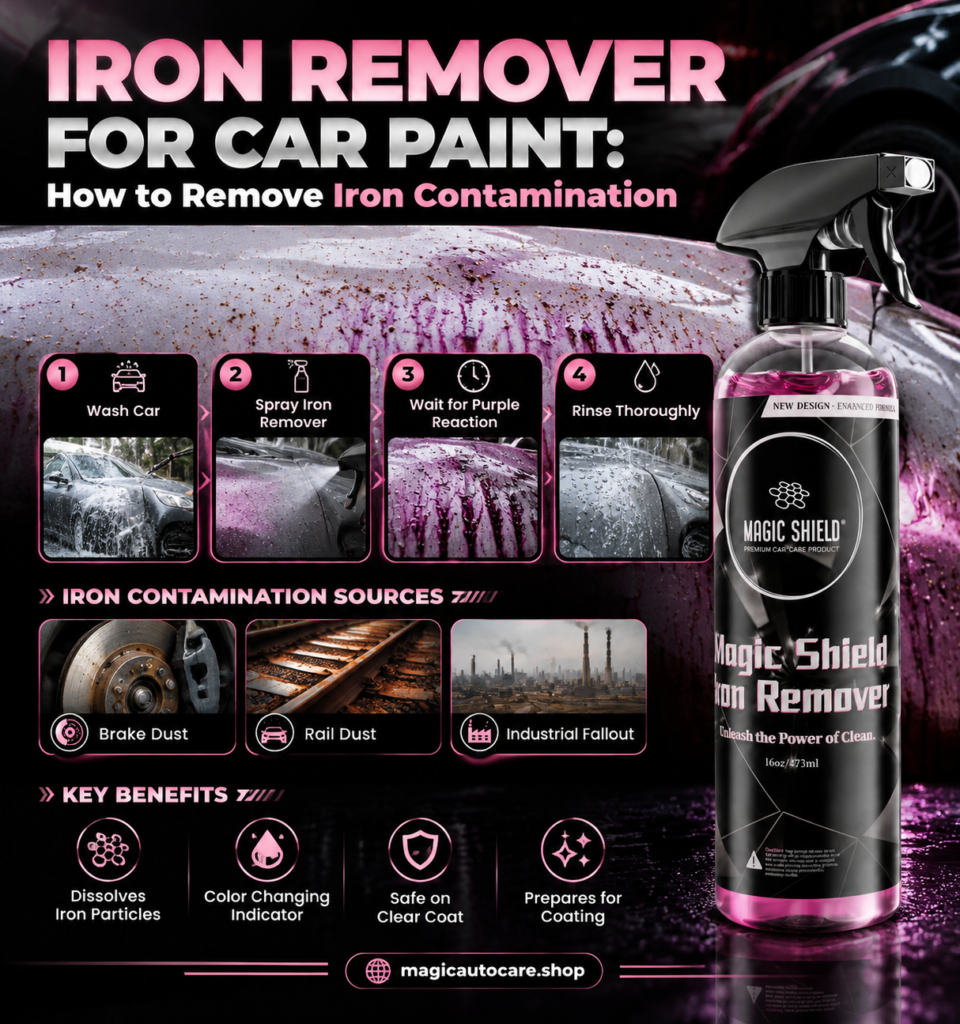
Road film, industrial pollution, mineral deposits, and other pollutants can affect how shiny or smooth the paint surface appears. A regular wash may remove dust, but bonded contaminants may need further paint decontamination before polishing.
5. Worn or Neglected Paint Protection
It is possible to work with slightly dull paint if the paint area and clear coat are still good.
Mild fading or oxidation will allow you to use any good polish of choice to make the surface look better with minimal paint loss.
However, it should be noted that there is a significant distinction between dull paint and the actual failure of paint.
Dull and good paint can still be treated with detailing processes, while peeling, flaking, or missing clear coat can require professional examination and imply refinishing.
Don’t start buying or working with products without carefully looking at the paint first.
How to Tell Whether Your Car Paint Is Oxidized or the Clear Coat Is Failing
This is one of the most important steps in the entire process. Using polish on paint with serious clear-coat failure can make the damage worse. Before you decide how to restore faded car paint, you need to know whether the clear coat can still be saved.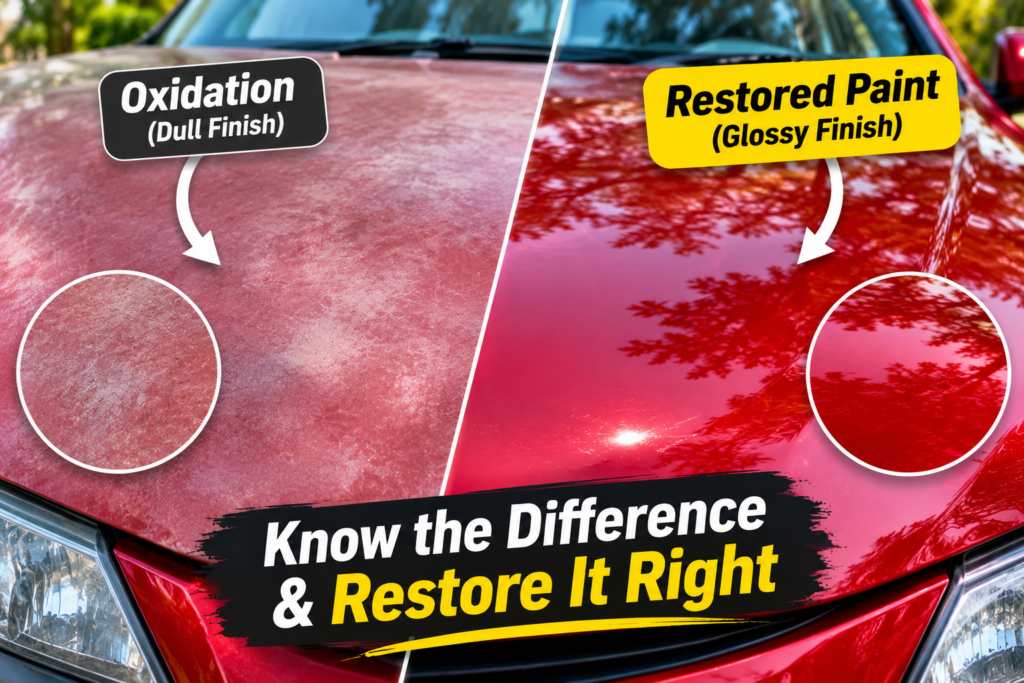
| Paint condition | What you may notice | Recommended approach |
|---|---|---|
| Light oxidation or dullness | Reduced gloss, mild haze, generally intact finish | Test a suitable polish on a small area |
| Light surface swirls | Fine circular marks visible in sunlight | Gentle paint correction may improve appearance |
| Moderate oxidation | More noticeable dullness or chalky appearance | Professional assessment or careful correction |
| Clear-coat failure | Peeling, flaking, cloudy patches, exposed color | Professional refinishing |
| Deep paint damage | Missing paint, exposed primer, or rust | Body-shop repair |
If you see peeling edges, large white patches, cracking, or exposed color, do not try to solve the problem with a coating or aggressive polishing.
For a more detailed explanation, see Nasiol’s guide to identifying oxidation and clear-coat failure.
What Do You Need to Restore Dull Car Paint?
In order to prepare a proper surface for paintwork, you should have:
Car shampoo
Microfiber washing mitt
Drying microfiber towel
Necessary decontamination agents, if it’s necessary
Suitable paint polish
Foam applicator
Buffing towels
Required paint protection stuff, if necessary.
It isn’t necessary to use each detailing product for every car – you should select the steps based on the condition of the paint. Choose only what you need when you learn how to restore faded car paint.
How to Restore Faded Car Paint Step by Step
Follow this process to improve dull or lightly oxidized paint while reducing the risk of unnecessary surface damage. This is the core of how to restore faded car paint step by step.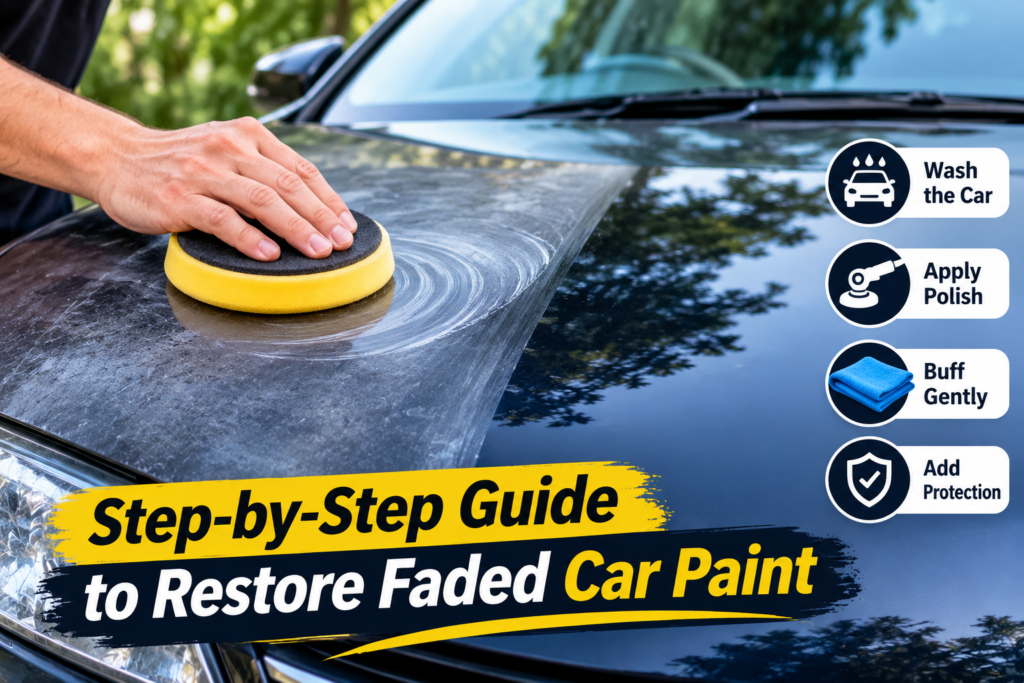
Step 1: Wash the Car Thoroughly
Begin by washing your car with car shampoo and washing tools. Washing is the first practical step in how to restore faded car paint.
The preliminary step must include removing all the loose dirt, dust, and grime. If you touch the paintwork with a buffer while still working on the dirty surface, you will smudge the finish.
Wash the car in sections, rinse well, and dry with a clean microfiber cloth.
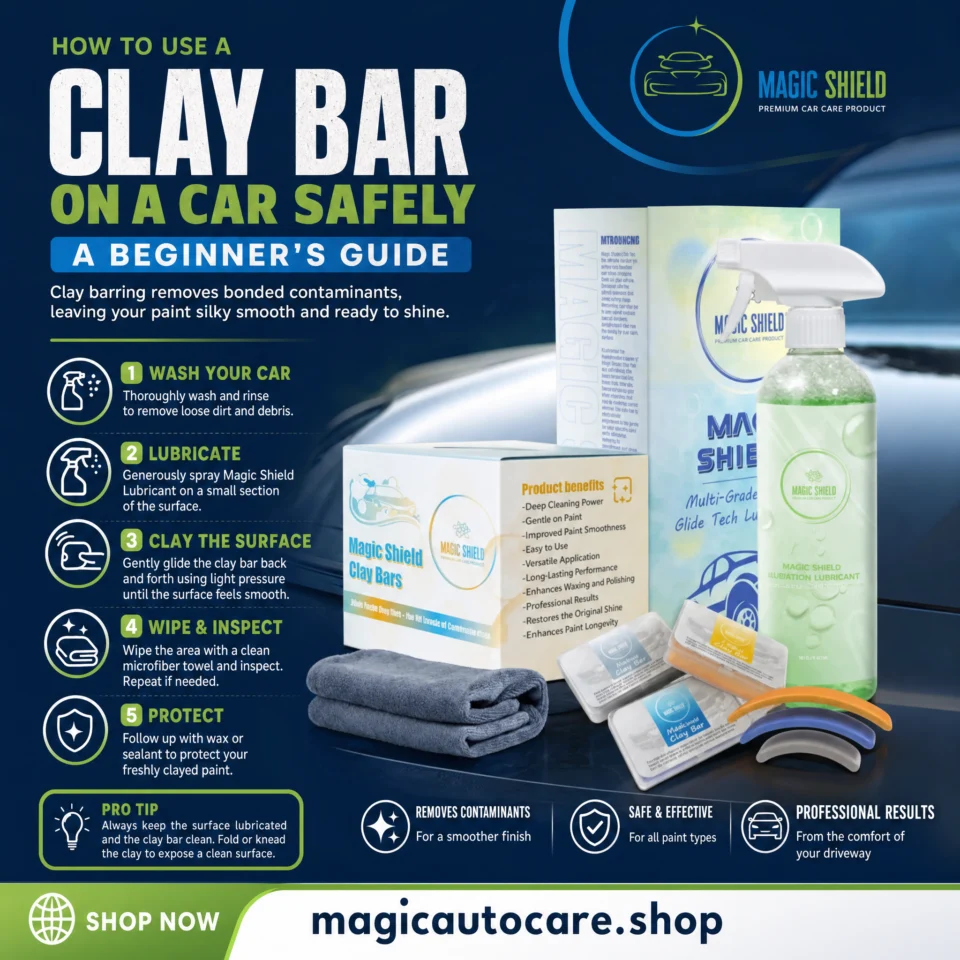
For the full wash and decontamination routine, see our guide on how to clay bar a car.
Step 2: Inspect the Paint Surface
After washing and drying the vehicle, you should examine the paint when there is enough light.
You need to check for:
– dull or foggy areas
– light swirl marks
– slight surface haze
– inconsistent gloss
– flaky paint
– deep scratches or exposed layers of paint.
Do not assume that every dull part needs polishing. If the clear coat is failing, stop what you are doing and reach out to professionals.
Step 3: Remove Bonded Contamination if Necessary
Sometimes paint looks dull because contaminants remain bonded to the surface even after washing. In the event that the paint surface appears to be rough, it could be that chemical or mechanical decontamination is needed. Make sure to select the least aggressive way of cleaning possible, while following instructions written for the product.
Mechanical decontamination treatments using clay do not need to be performed on every car or vehicle. These treatments could potentially cause light marring to the paint if not performed correctly, thus using the correct lubrication and technique is crucial. Only decontaminate when the surface needs it, as part of how to restore faded car paint.
For smoothening a surface, try the Magic Shield Clay Bar Kit.
Step 4: Test a Small Area with a Suitable Polish
Before polishing the whole car, choose a small, inconspicuous section. A test spot is essential when you learn how to restore faded car paint, because it shows how the paint reacts before you commit to the whole car.
Select the polish and the applicator according to product specifications. Apply and check results under bright light.
The small patch will help you evaluate how the paint responds to the correction process.
If results are favorable, you can apply the same approach further. If there is some haziness or the paint seems to be getting worse or showing clear coat failure signs, then stop at once.
Step 5: Use a Suitable Polish to Improve Light Oxidation and Dullness
A paint polish can help with minor paint defects such as swirls, oxidation or haze, improving both gloss and clarity. This is where most people learning how to restore faded car paint see the biggest improvement.
The Magic Shield One Step Polish is made for swirls, haze, oxidation, and dull paint, and the product requires use of the instructions provided to either do the task manually or machine polish.
Why do you need to consider One Step Polish?
Helps fix minor paint imperfections
Brings back good-looking, dull/hazy paint
Brings back clarity and gloss to the surface
Provides a targeted polish solution without a need for any separate finishing polish in order to fix any minor defects
Check out Magic Shield One Step Polish for more information on the product, its use, and demo.
Step 6: Remove Residue and Inspect the Finish
Once you have finished polishing, take a clean microfiber cloth and wipe off the residue as per the manufacturer’s guidelines.
Visualize the surface from different angles in the right lighting to see if it looks more polished and glossier.
Resist the urge to keep polishing just because there are some imperfections left. The automotive clear coat can only take so much correction before it becomes overly thin.
Step 7: Add Suitable Paint Protection
When the surface is successfully primed, it is time to evaluate if it is suitable for protection products.
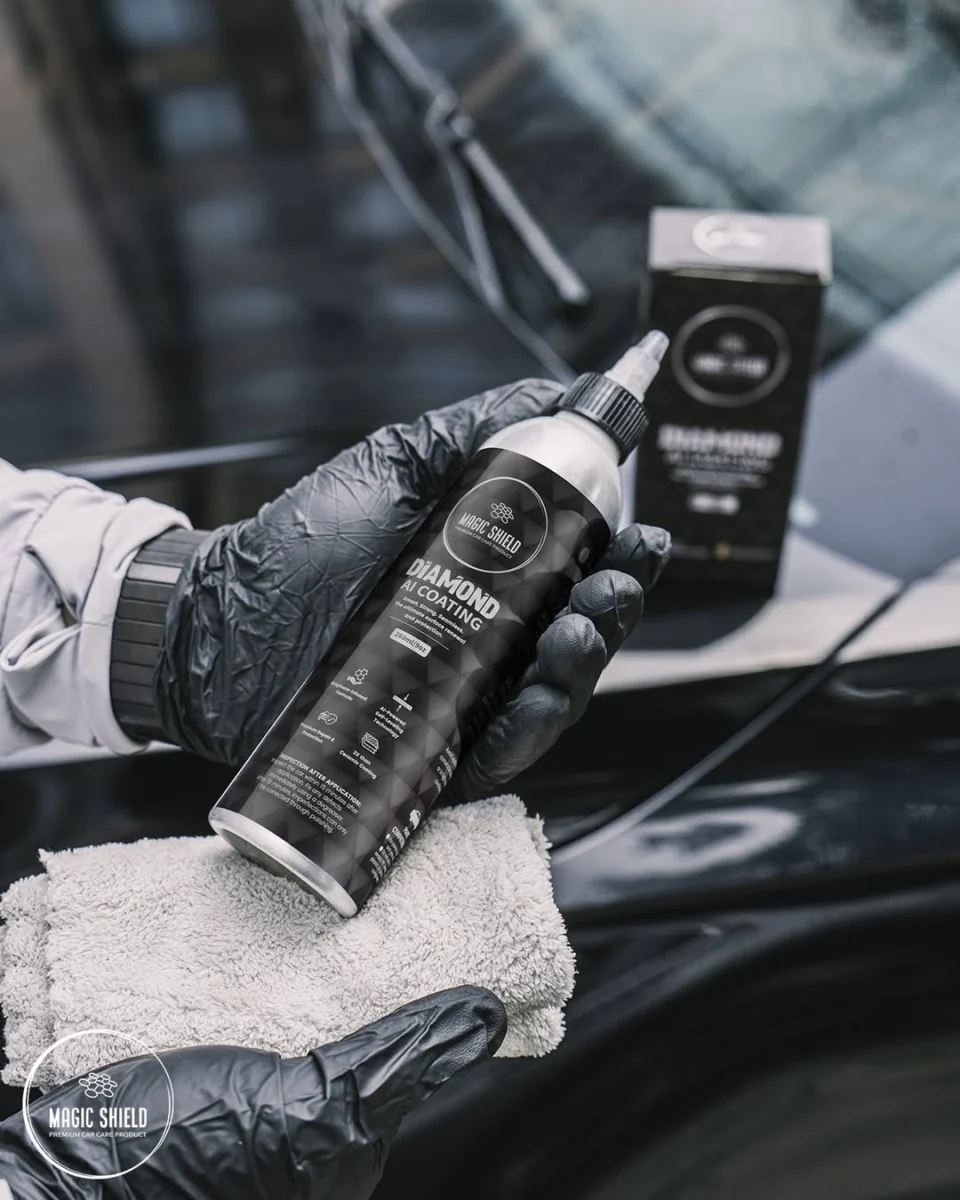
Magic Shield Diamond AI Coating is a distinct coating that is designed to change the look of faded paint and create a brilliant protective surface. It should not be considered a method of paint correction or a substitute for a faulty clear coat.
In case you have decided to use Diamond AI, you will need to understand how to prepare, apply, and cure the material.
You can learn more about Magic Shield Diamond AI Coating and its characteristics before deciding if it is a coating to work with.
How to Make Faded Car Paint Look New Without Damaging It
In case you want to bring faded car paint to its former glory, you should keep in mind that using such means as an overly aggressive approach for the purpose of achieving quick results is inadvisable. That is why how to restore faded car paint safely means working gently and stopping at the first sign of trouble.
When polishing, follow these rules:
Always wash your vehicle before polishing.
Work on cool paint in a shaded area.
Always test the products before applying them.
Use clean pads and clean microfiber cloths.
Apply the product according to the instructions.
Avoid pressing too hard when polishing.
Stop polishing if you find cracking paint or other major defects.
Use a suitable paint protection after correcting the finish.
Can Polish Fix Severely Oxidized or Peeling Car Paint?
Polishing does not work in all cases. Whether polishing works depends on how far the damage has gone, so how to restore faded car paint always starts with an honest assessment of the clear coat.
If the paint surface is intact but only slightly cloudy or oxidized, polishing can improve the finish. However, when there is severe oxidation, it must be examined carefully because the amount of remaining clearcoat is very important.
Having a clearcoat that peels off, cracks, curls, or is missing is a different case. Polishing will not help in that case, either.
If you are unsure about your car’s paint condition, contact a professional for assistance.
Common Mistakes to Avoid When Restoring Faded Car Paint
Polishing Before Washing
Loose soil and contamination can scratch the paint as they move across the surface.
Using Too Much Pressure
Using excessive pressure causes more damage than good; it can be detrimental to the paint.
Applying Products in Direct Sunlight
High temperatures can make products harder to use. That is why they should be applied according to the manufacturer’s recommendations.
Expecting a Coating to Repair Paint Damage
Coatings can make the car look better and provide some level of protection, but they cannot fix missing paint or pulling clear coats.
Repeating Polishing Too Often
Polishing is a correction process and should not be used all the time. With each polishing, some paint is removed.
Ignoring Product Instructions