Iron Remover for Car Paint: Magicshield
Washing your car often lifts dirt, dust, road grime, andiron remover for car paint other loose stuff from the surface. Still, some material can cling to the paint and won’t budge, even…

Washing your car often lifts dirt, dust, road grime, andiron remover for car paint other loose stuff from the surface. Still, some material can cling to the paint and won’t budge, even with a careful wash.
Brake dust, rail dust, and other road grime can leaveiron remover for car paint tiny iron bits behind. Over time they can sit in the clear coat. The finish may feel rough to the touch after you rinse and dry.
That is why people use an iron remover on car paint. The product reacts with iron and turns those particles into something that can be rinsed off. You do this before claying, polishing, or adding any paint protection.
This write-up covers what iron contamination is. It also iron remover for car paintexplains how iron remover works, how to use it safely, and when it should be added to your detailing routine.
What Is an Iron Remover for Car Paint?
An iron remover is a chemical cleaner made to deal with iron deposits on a car. It works on particles that stick to the paint or get pushed into the surface.
You may see this kind of fallout from a few common places. For example, brake dust can cling to the bodywork. Rail dust can also settle there. Roads can bring in industrial bits. Metaliron remover for car paint debris from driving and traffic adds to it too.
Regular car shampoo is good for everyday mess. It lifts looseiron remover for car paint dirt and grime. But if the iron is already bonded, washing alone may not be enough. That is when you use a separate decontamination step.
Using an iron remover first can help loosen the contamination. Then you can remove it by hand or with tools. After that, you can apply a protective product if you want.

Why Does Car Paint Get Iron Contamination?
Your car is always dealing with what the road sends its way.
Brakes can release tiny metal dust into the air. Trains, factories, and iron remover for car paintnormal city traffic can add even more iron in the air.
Some of that material lands on the car. Over time itiron remover for car paint can stick to the paint. Regular washing may not lift it out.
You might see signs like these:
– Paint that feels rough or sandy
– Small orange or brown marks
– Brake dust that gathers near the wheels
– Dirt that is heavier on the lower panels
– A finish that still feels bumpy after you wash it
Iron buildup is not always easy to spot. A car caniron remover for car paint look neat on the outside, yet still have pieces that have bonded to the paint.
How Does an Iron Remover Work?
Iron removers are made to react with iron in grime.
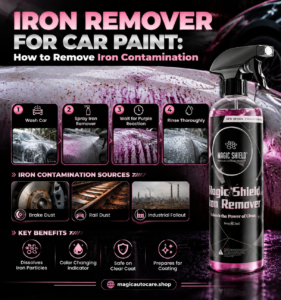
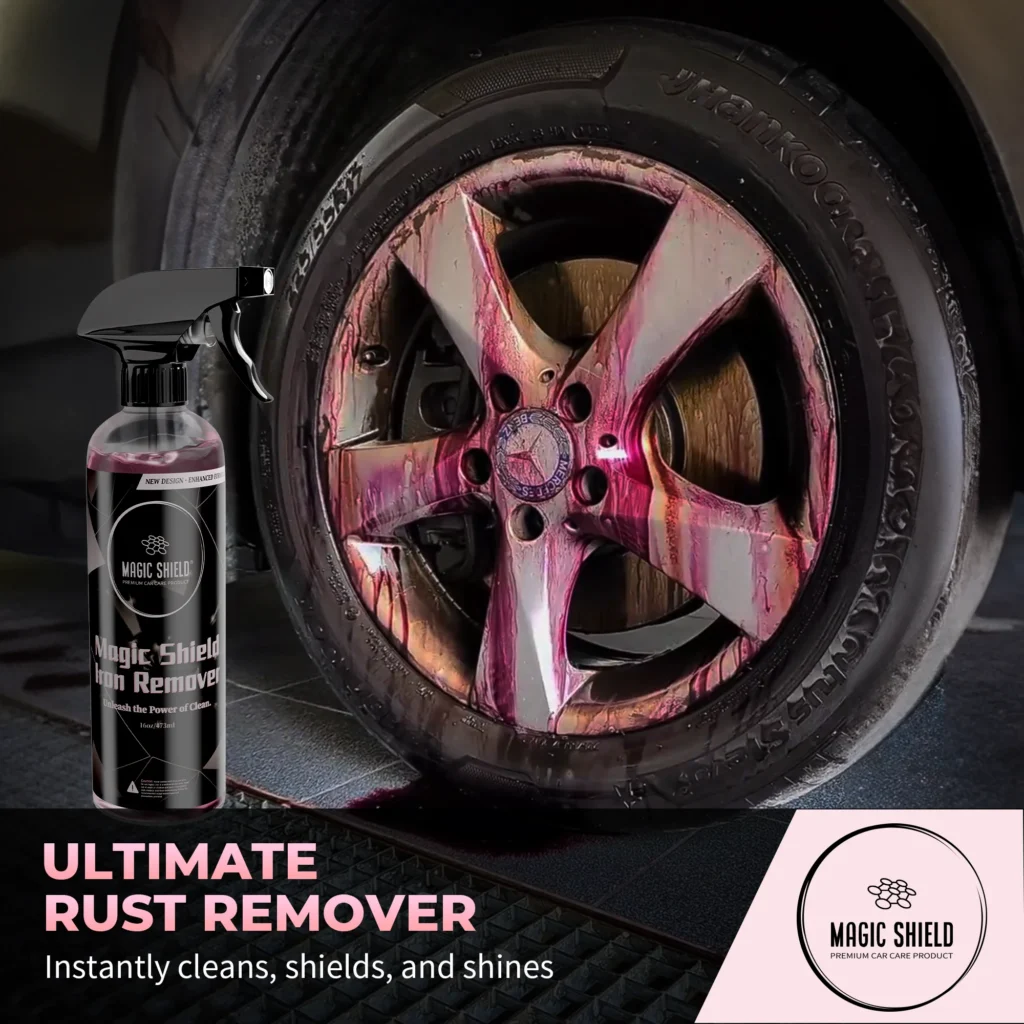
When the cleaner touches iron particles, you mayiron remover for car paint see a color shift. People often report purple or pink tones. That color change is the sign that the cleaner is working on the metal dirt.
After the reaction, you can rinse the surface well.
This matters because the iron breaks down iniron remover for car paint the process. Then you can use a clay bar or do the next steps in paint prep without the metal stuff still sitting there.
Can You Use an Iron Remover on Car Paint?
A properly made iron remover can be used during paint decontamination.
That said, how you apply it is important.
For instance, Magic Shield Iron Remover is made for cleaning the outside of cars. It is meant to pull out iron bits and brake dust from paint and other tough outer surfaces.
Do not assume every iron remover works the same. Read the directions for your exact product and follow the safety notes.
How to Use an Iron Remover for Car Paint
It is usually easy to use an iron remover, as long as the surface is ready first.
Step 1: Rinse the car
Begin with a solid wash.
Get rid of loose dirt, mud, road grime, and any other buildup on the surface.
You want the iron remover to have a cleaner area to act on.
Step 2: Park in the shade
Work with the car in a cool spot.
Keep it out of direct sun while you work.
Do not put iron remover on warm paint, since it can set up fast and lose effectiveness.
Step 3: Mix the bottle
Shake the bottle well before you start.
This helps make sure the product is mixed the right way.
Step 4: Apply the Iron Remover Spray
or apply a steady, even coat on the spots that need treatment. Focus on the areas that often collect buildup, such as: Wheels Lower rocker panels Behind the wheels Other parts that get a lot of exposure Step
5: Wait for the Reaction
Let it sit for the time listed on the label. As it reacts with iron contamination, a purple or pink color may show up. Do not let the product dry on the paint.
Step 6: Rinse Clean
Rinse the treated areas well with clean water. Make sure there is no leftover residue left behind.
Step 7: Use Paint Decontamination
if Still Needed If the paint still feels rough after the iron remover, more stuck contamination may remain. You can use a clay bar next to lift what the iron remover did notiron remover for car paint break down.
Iron Remover vs. Clay Bar: What’s the Difference?
Iron remover breaks down iron particles on the paint surface.
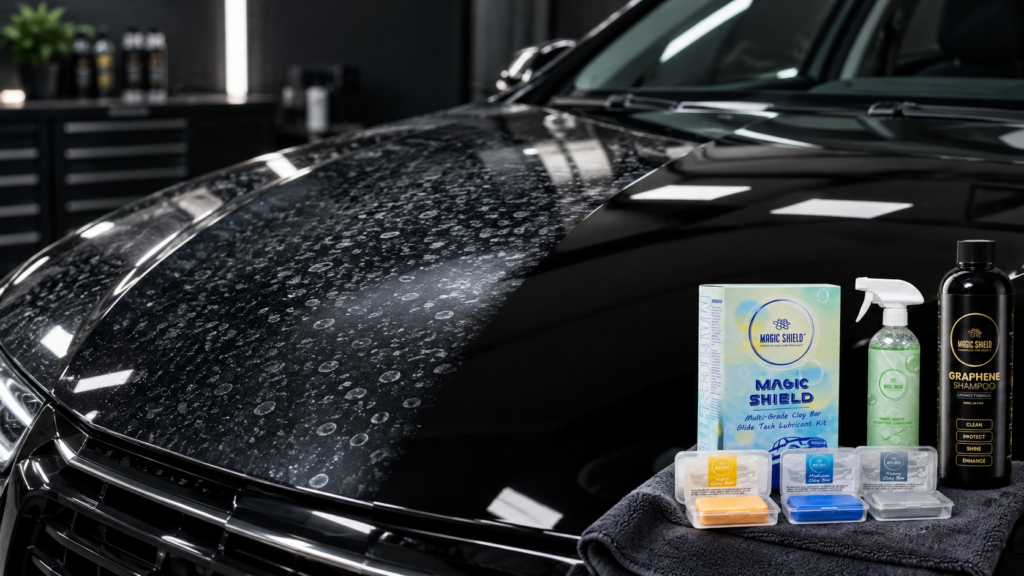
Clay bars lift other bonded grime and contamination when you rub them across the finish.
Both can help you prep the paint, but the process is not the same.
| Iron Remover | Clay Bar |
|---|
| Chemical decontamination | Mechanical decontamination |
| Targets iron and ferrous particles | Removes bonded surface contamination |
| Sprayed onto the surface | Glided across lubricated paint |
| Rinsed away | Contamination is picked up by the clay |
| Best used before claying | Can follow iron removal |
When the paint is very dirty, the order you do things in matters. If you follow it the right way, the prep work can work better.
Iron Remover → Rinse → Clay Bar → Polish if needed → Prep → Protection
Why Use Iron Remover Before Clay Bar?
Getting rid of iron specks before you clay helps cut down the residue the clay would otherwise grab.
That can make the cleaning step feel more steady and helps avoid extra rubbing on the paint.
If the panel still feels gritty after the iron step, use a clay treatment that fits the surface.
Should You Use Iron Remover Before Ceramic Coating?
Iron removal can matter when you are getting paint ready for polishing or for a ceramic coating.
You want the panel to be clean and properly decontaminated before you move on.
A common prep flow is like this. First, wash the car.iron remover for car paint Then use an iron remover. After that, rinse well. If the paint still feels rough or contaminated,iron remover for car paint use a clay bar. Next, polish the surface only if you need paint correction. After polishing, wipe off any polishing oilsiron remover for car paint and leftover residue. Then you can apply the ceramic coating.
The real steps can change based on how the car looks and what the coating maker tells you to do.
Magic Shield Iron Remover for Car Paint
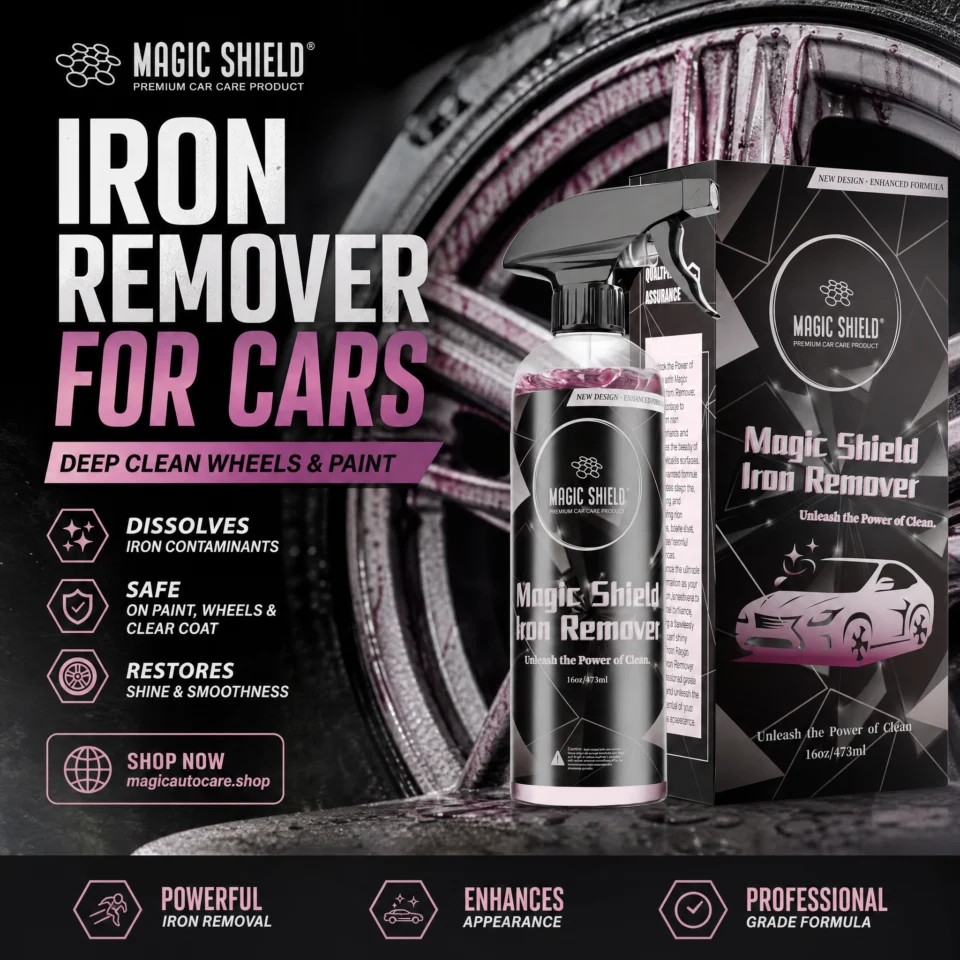
DIY detailers and vehicle owners who want to clean theiriron remover for car paint paint at home can use Magic Shield Iron Remover. It is made to break down iron specks and brake dust that get stuck in the finish before you do the next steps.
When you apply it, the liquid changes color. That shift iron remover for car painthelps you see that it is working and reacting to iron contamination.
You can buy it in a 473 ml or 16 oz bottle. It is meant for automotive exterior paint.
You can also use it as part of your prep routine. Many people use it before claying, polishing, or adding a coating.
If you want to include chemical decontamination in your detailing work, check Magic Shield Iron Remover at MagicAutoCare.shop.
Common Mistakes to Avoid When Using Iron Remover
Using It on Hot Paint
Make sure the surface is cool first. Do not work in direct sun.
Letting the Product Dry
Do not let the iron remover sit and dry on the car. Rinse the area well within the time stated for use.
Skipping the First Wash
Do not treat iron remover like a full car wash. Wash normally first. Get loose dirt and grime off the surface.
Thinking It Will Remove Everything
Iron remover is made for iron based marks and residue. It does not cover every type of contamination.
Tar, sap, and other stuck grime
Tar and tree sap can need a different product or a different way to clean. Some bonded contaminants also may require other steps.
Skipping the Rinse
A good rinse matters. If you do not rinse well, chemicals can stay on the car.
Applying It in Direct Sunlight
Try to avoid hot, direct sun. Heat may dry the product too fast, and it can be harder to spread.
How Often Should You Use an Iron Remover?
No one timetable fits every car.
How often you need chemical decontamination depends on a few things:
– The roads you drive on
– How frequently you wash
– How much brake dust you see
– What types of road dirt and industrial fallout are around
– The way the paint looks and feels
– If you are getting ready to polish or to add a coating
For normal upkeep, check the paint from time to time. Use an iron remover only when you spot contamination. Do not use it after every wash just by default.
Does Iron Remover Damage Car Paint?
A good automotive iron remover, when used as the label says, helps with vehicle decontamination.
That said, mistakes can lead to issues.
Be sure to do these steps:
– Read and follow the instructions on the bottle.
– Use it on a cool surface.
– Keep the area out of direct sun.
– Do not let the product sit and dry.
– Rinse well after use.
– Try it on a small hidden spot first if you have not used that product before.
Formulas vary from brand to brand, so you should follow the directions for the exact iron remover you bought.
FAQ’s
What does iron remover do to car paint?
Iron remover works by going after iron left on a car’s surface. That iron can be stuck to the paint or trapped in tiny spots. The product breaks that iron down, so it can be washed off with a rinse.
Can iron remover remove brake dust?
Yes, it can help with brake dust. Brake dust often has iron in it. Iron remover is made to tackle that kind of buildup, especially on wheels.
Can you use iron remover on clear coat?
You can use iron remover on clear coat, but only if it is meant for that use. Use an automotive iron remover meant for paint decontamination. Follow the directions on the label.
Does iron remover remove scratches?
It will not remove scratches. Iron remover is for cleaning and decontaminating the surface. It does not fix swirl marks or other paint damage.
Do you clay after using iron remover?
Sometimes, yes. Iron remover goes after iron or rust-like buildup. Clay can help with other stuck-on bits that the remover did not lift.
Should I use iron remover before ceramic coating?
Usually it helps as a prep step. It can pull out metal particles left in the paint. After that, you might still need to clay, polish, and do a final wipe, depending on how the surface looks.
Why does iron remover turn purple?
It turns purple or pink because it reacts with iron-related contamination. How strong the color change looks depends on how much iron is there.