How to Remove Road Grime from Car Paint Without Damaging the Finish
Road grime is one of those issues that makes a washed car dirty in a very short time. When the vehicle is driven in rain, construction sites, busy streets or on the…

Road grime is one of those issues that makes a washed car dirty in a very short time. When the vehicle is driven in rain, construction sites, busy streets or on the highway, it gets covered with a thin layer of film. This film usually looks like a dull, grayish coating on the lower doors, rear bumper, rocker panels, and at the back of the car. That is why so many drivers search for how to remove road grime from car paint.
The bad news is that a simple rinse is not always enough to clean it. In some instances, even regular washing does not get rid of this film.
So, how do you remove road grime from car paint without scratching the clear coat?
The most important thing is to remove the dirt and dust without damaging the paint. Proper washing techniques, suitable car wash soap, and clean microfiber cloths remove road grime safely without damaging your car’s paint.
In this article, we explain what road grime is, how it sticks to the paint, how to wash it off correctly, and when it may be important to do more than just wash the vehicle’s surface.
What Is Road Grime on a Car?
Road grime is dirt and contaminants accumulated on a vehicle as it drives on the road. Road grime can include road dust, mud, oily residue from vehicles, microscopic particles, and mixed debris from other environmental sources. Knowing how to remove road grime from car paint starts with recognizing this bonded film.
Road grime is different from loose dust in that it adheres firmly to the surface of the paint, especially when there is moisture and evaporation.
You may notice this grime commonly present:
At the lower edge of the door panel and rocker panels
At the back bumper and trunk
In the wheel arches and lower skirt
On the front bumper and side mirrors
Around the wheel arches
Although the dirt can cause paint to look dull, not every stubborn stain is road grime. Mineral deposits, tar, tree sap, and iron fragments are different kinds of contaminants and may require a separate means of treatment.
Why Does Road Grime Stick to Car Paint?
Several factors make road grime difficult to remove with an ordinary rinse. That is why drivers look up how to remove road grime from car paint instead of just rinsing.
1. Water and Dirt Mix Together
The water from rainfall combines with the road dust, dirt, and traffic substances. So, when the water evaporates, some of that matter stays on the car’s surface.
2. Oily Traffic Film Builds Up
As you drive, oily dirt and airborne particles form an oily film that does not wash away with just water.
3. Heat and Sunlight Can Make Cleaning More Difficult
When dirt settles on a hot vehicle, some of the moisture evaporates and leaves residue behind. Furthermore, the surface temperature makes it difficult to clean because it dries up products too quickly.
4. The Lower Panels Receive More Contamination
The lower part of the car is constantly coated in dirt thrown up by the tires, so the lowest panels get the dirtiest.
How to Remove Road Grime from Car Paint Safely
The safest approach is to remove loose dirt first, use a suitable automotive shampoo, and avoid rubbing stubborn contamination across the finish.
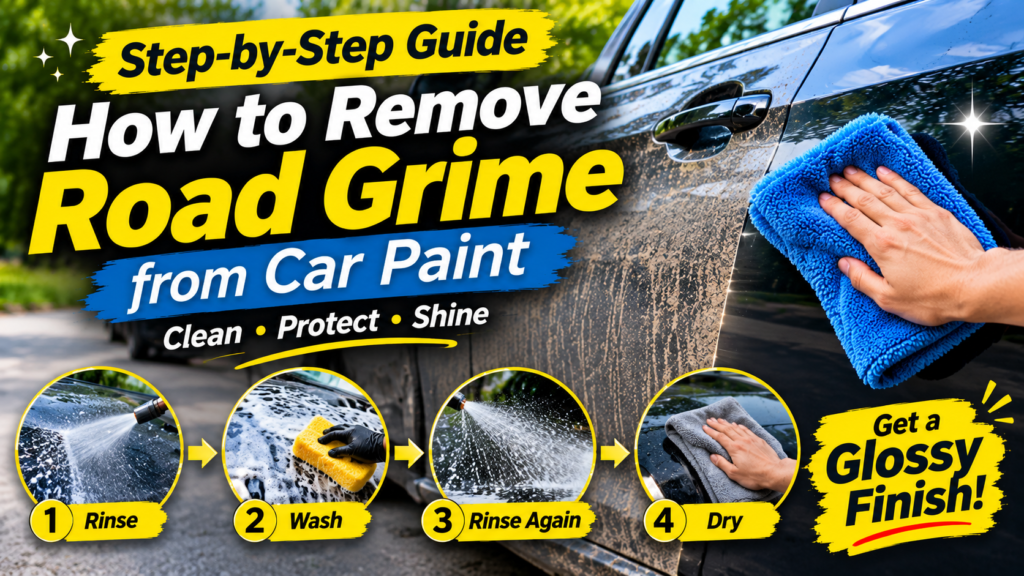
Follow these steps. Each step below shows how to remove road grime from car paint without scratching the clear coat.
Step 1: Park in the Shade and Let the Surface Cool
Before starting the cleaning process, make sure to position your car where sunlight can’t directly touch it and allow the vehicle to cool. Using products on a hot surface can make them evaporate quickly, leaving residue. When the surface is cooled down, you get better control during the cleaning process. Park where you can rinse the car properly afterward. Starting with a cool, shaded surface is the first move in how to remove road grime from car paint safely.
Step 2: Rinse Away Loose Dirt and Road Debris
Start by rinsing the car thoroughly with water. When washing, be sure to rinse the lower doors, wheel arches, rear bumper, and other places where road dirt tends to accumulate. This step helps clear away loose debris before washing. Without rinsing first, you risk dragging dirt across the paint. Never rub dirt off a dry surface with a towel.
Step 3: Wash the Vehicle with a Suitable Car Shampoo
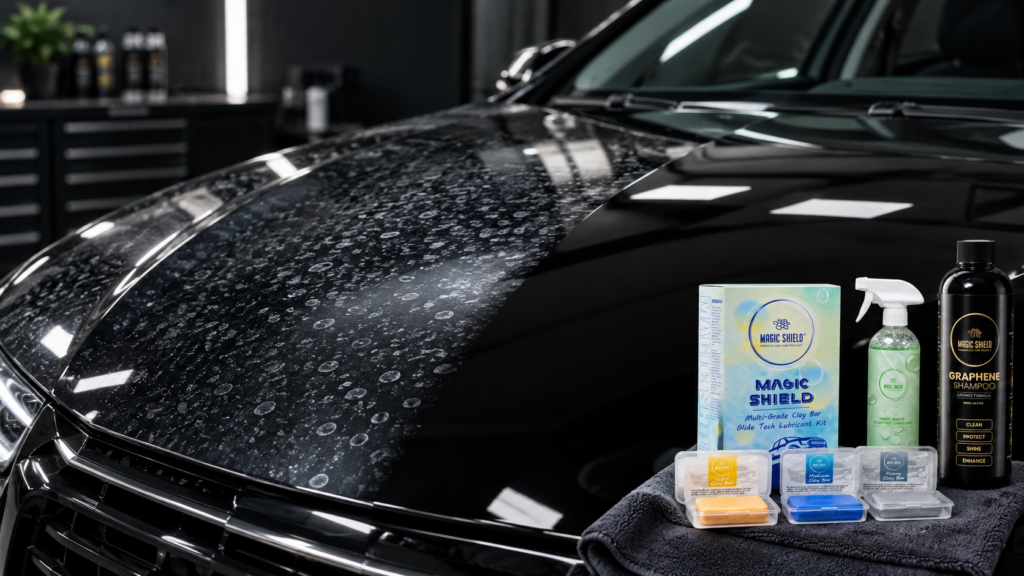
Once rinsed off, start washing the vehicle’s paint using an automotive shampoo. Proper car shampoo helps to remove usual grime, thereby allowing you to wash the surface without unnecessary friction. Magic Shield Graphene Shampoo is part of the Magic Shield car cleaning range and can be used for vehicle cleaning on a regular basis. Make sure you read the application instructions of the product and check whether it is appropriate with respect to your vehicle’s existing protection.
Use a clean wash mitt and work in manageable sections. Start washing the upper parts of the car before moving on to the dirtier lower areas. Wash the mitt periodically to get rid of the collected dirt. Never use your regular dish soap instead of automotive shampoo since it is not specifically designed to care for vehicle paint. A proper shampoo is essential when you learn how to remove road grime from car paint without stripping protection.
Step 4: Pay Extra Attention to Heavily Soiled Areas
Bottoms of doors, rocker panels, bumpers in the back, and wheel arches could need more scrubbing. Follow the shampoo’s instructions when you apply it and let the dirt loosen. Be careful when scrubbing instead of trying to apply more pressure. If an area is still dirty, stop scrubbing. Rinse the area and try to identify what it is — road dirt or something else. For a full walkthrough of the hand-washing technique, see this guide on how to wash a car by hand.
Step 5: Rinse Thoroughly
After washing your vehicle, rinse it to remove all shampoo and loosened dirt. Make sure to check areas like panel edges, door handles, mirrors, and the bottom parts of your vehicle for any soap or residue left over. Thorough rinsing prevents any cleaning solution from drying on the paint.
Step 6: Dry the Paint with a Clean Microfiber Towel
Use a clean, soft microfiber drying towel that is safe for the car paint. Keep drying the panels without moving contaminants or using a soiled towel. Replace the towel if it is too dirty. Air drying can leave stains on the paint, especially if you use water that contains high levels of minerals. Drying is the final step in how to remove road grime from car paint, and it is when any leftover film shows up.
What If Road Grime Does Not Come Off After Washing?
There are instances when a car may appear clean after washing, yet its surface has some irregularities and patches. At this point, how to remove road grime from car paint becomes a question of matching the method to the contaminant.
However, this does not imply that all it takes is a better detergent or vigorous brushing of the surface. Whatever’s left on the car may actually not entirely come from dirt found on the road. Once you know how to remove road grime from car paint, you can match the method to the contaminant instead of scrubbing harder.
Here’s how to recognize the difference.
Ordinary Road Film and Surface Dirt
When tough dirt has built up on the paint, a thorough wash will sometimes be needed. Start with a good rinse and suitable car shampoo.
Embedded Iron Contamination
Minute iron particles originating from brakes and other iron sources can be embedded on the paint of cars. They will probably still be there even after washing. There are special removers made to eliminate this type of contamination. The Magic Shield Iron Remover for Car Paint guide explains how chemical decontamination is done.
Bonded Contamination
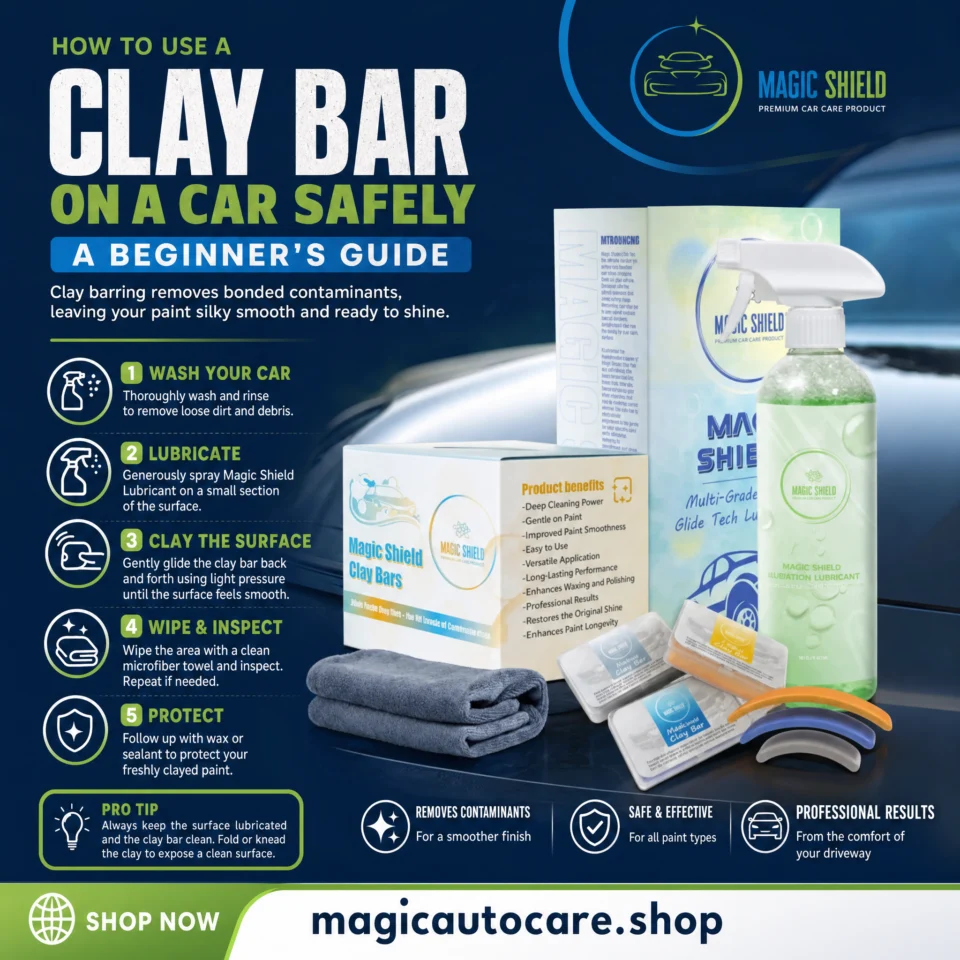
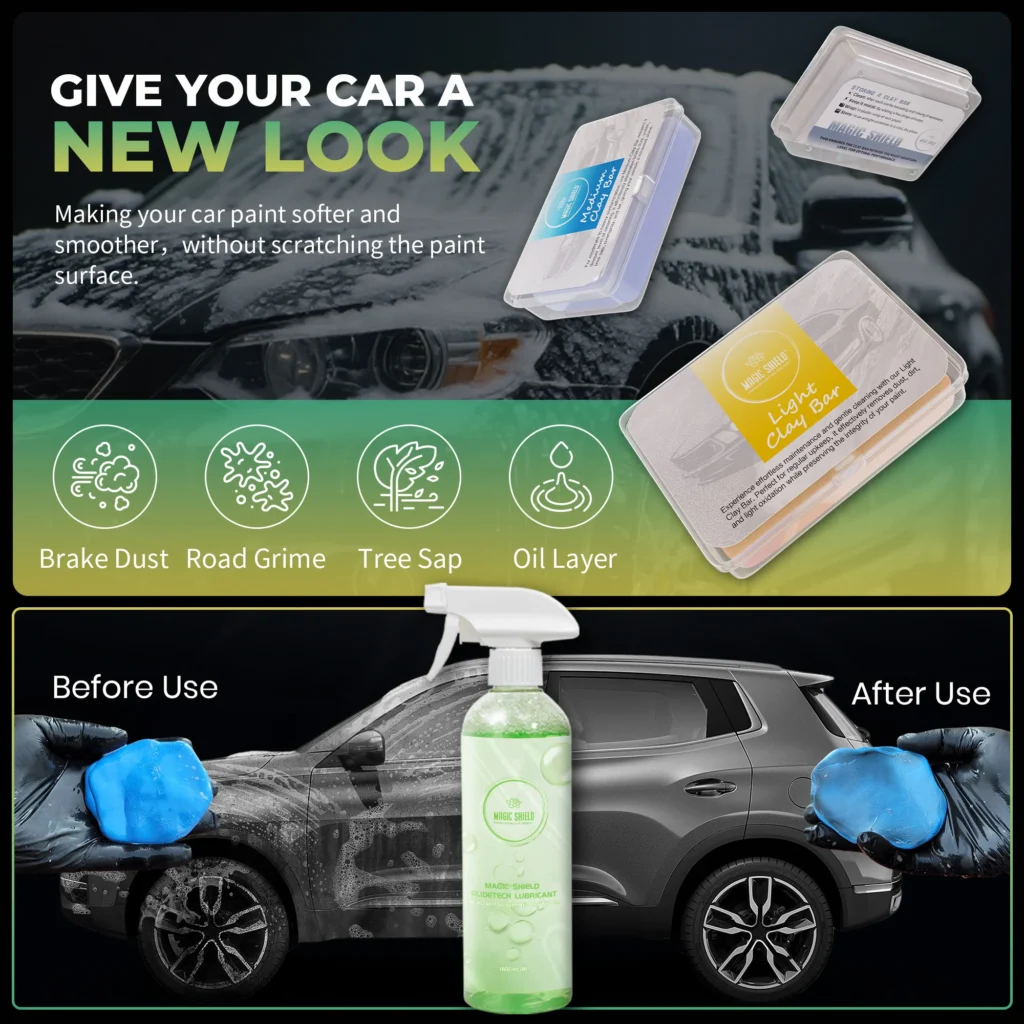
If, after washing and chemical decontamination, the paint is not smooth, it means that it may still have some bonded particles. A clay bar may work in removing some types of bound impurities with the right kind of lubrication and gentle pressure. However, clay should not be used to replace washing. If not done properly, clay may cause minor scratches to the surface, so do it only when absolutely necessary.
Tar, Sap, and Mineral Deposits
Tar, sap, and mineral deposits are not the same as regular dirt. Don’t think that shampoo, iron remover, or clay will erase all stubborn marks. First, identify the type of contamination and select the appropriate product for it.
How to Prevent Road Grime from Building Up on Your Car
You cannot prevent all road contamination, but a consistent maintenance routine can make cleaning easier. These habits keep you from having to learn how to remove road grime from car paint the hard way.
Wash the Vehicle Regularly
Do not let grime build up over time. Wash a vehicle when it appears filthy, especially after a long trip or driving on muddy roads and trails.
Use Clean Washing Materials
Dirty cleaning cloths and mitts can transfer dirt back to the vehicle’s paint. Use clean items and be sure to separate the more contaminated lower parts of the vehicle from the less contaminated higher parts.
Avoid Washing in Direct Sunlight
A cool, shaded surface gives you more time to wash.
Dry the Vehicle Properly
After rinsing, use a clean microfiber drying cloth. Effective drying is essential for getting rid of water residues.
Maintain Existing Paint Protection
Properly maintained paint protection makes washing easier, but dirt and other contaminants will still reach the paint. If a car has ceramic protection, follow the recommended maintenance process and use the right cleaning products.
Can Ceramic Coating Prevent Road Grime?
Ceramic coating can increase the hydrophobic properties of car paint, thereby making maintenance easier. Water can bead or sheet on the surface, which helps with cleaning. That slick surface is one reason drivers learning how to remove road grime from car paint often look into coatings.
Still, coated paint does not completely protect the car against dirt particles.
Road grime, soil, brake dust, mineral buildup, and other elements may still stick to the paint. Even a coated car still needs proper cleaning and decontamination.
The best approach is to keep the surface clean without aggressive methods and to follow the product directions when maintaining the coating.
Common Mistakes to Avoid When Removing Road Grime
Sometimes a simple car wash could result in damage to the paint if it was done improperly. Knowing how to remove road grime from car paint the right way helps you avoid that damage.
Here are some common mistakes to avoid:
Rubbing dirt while the paint is still dry: Rubbing the paint with dry dirt leads to fine scratches on its surface.
Using some household cleaners: Not every household cleaning product is okay to use on car paint.
Pressing too hard: Applying pressure while trying to remove tough dirt does not guarantee that it will come off faster.
Using contaminated microfibers: If dirt particles are stuck in the fluff of microfibers, scratches may appear on the paint.
Letting the shampoo become dry: Cleaning products left on the paint could dry and make their removal difficult.
Using iron removers for all dirt: Iron removers are only effective in removing iron dirt and are used for no other purpose.
Using clay unnecessarily: Clay should be used only for dirt that is attached to the paint.
FAQs
1. What is the best way to remove road grime from car paint?
Rinse the loose dirt off, wash the entire car with a proper vehicle shampoo and a clean wash mitt, then rinse and dry with a clean microfiber cloth. In case of continued contamination, you should first identify it and then choose another product.
2. Does regular car shampoo remove road grime?
Car shampoo can certainly remove many types of everyday dirt and road film, but it may not be able to get rid of embedded iron particles, bonding contamination, tar, or mineral build–up.
3. Can road grime damage car paint?
Road grime itself is not necessarily harmful, but residue left on the paint can damage the finish, especially if it is rubbed off with harsh methods.
4. Why does my car still look dirty after washing?
These could be bonded contamination, iron particles, tar, or mineral buildup, or some residue left as a result of washing, rather than simple dirt.
5. Can I use a pressure washer to remove road grime?
To reduce road grime, a pressure washer is useful for washing off loose dirt before hand washing. Use the correct pressure washer setup, keep a safe distance, and follow the manufacturer’s instructions. Avoid high-pressure washing on damaged paint, loose moldings, and other sensitive seals.
6. Does ceramic coating make road grime easier to remove?
Ceramic coating can improve how water behaves on the paint and make it easier to clean the car. But it will not stop road grime from sticking to the vehicle completely; it will make washing easier.
7. Should I use a clay bar to remove road grime?
Clay is not recommended for regular loose dirt and road grime. Wash the vehicle before using chemical decontamination. You should only consider using clay if the surface is still contaminated.
8. How often should I wash road grime off my car?
There is no set rule that fits all cars. It depends on driving conditions, weather, and how quickly dirt builds up on the vehicle. Wash your vehicle when it looks dirty, clean heavy contamination as soon as possible, and do not allow it to build up.