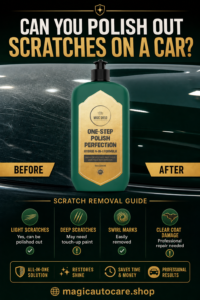
Can You Polish Out Scratches on a Car?
A clean car can start to look gray when it has tiny scratches, swirl marks, or small paint flaws. Often, those light scuffs can fade after polishing, mainly if the can you…
A clean car can start to look gray when it has tiny scratches, swirl marks, or small paint flaws. Often, those light scuffs can fade after polishing, mainly if the can you polish out scratches on a carscratch stays in the clear layer.
That said, polishing does not fix every case. If the scratch is deeper and has cut past the clear coat, you will usually not get full results with polish by itself.
In short: light surface scratches often come out with polishing. Can you polish out scratches on a car If the damage goes deeper into the paint, primer, or metal, you typically need more work than polishing.
What Types of Car Scratches Can Polish Remove?
Before you try to fix it, you should first judge how deep the scratch goes.
Car paint is not just one layer. It usually has a clear coat on top, then a color coat, and underneath that a primer layer. If the scratch stays only in the can you polish out scratches on a carclear coat, it is usually simpler to repair. But if the damage goes into deeper layers, the job gets harder.
Clear-Coat Scratches
Clear coat scuffs are a good place to start when you polish. They sit on the clear layer that covers the paint. They do not usually harm the color layer below.
With the right polish, you can polish out scratches on a car and even out the rough spots. That can make the surface look better again.
Light Surface Scratches
Scuff marks from wrong washing, rough drying,can you polish out scratches can you polish out scratches on a car on a car or normal use can sometimes look better after polishing.
One round might not make every mark vanish. Still, with the right paint correction, the scratches can become far harder to see.
Swirl Marks
Swirl marks look like tight circles or web patterns. You usually see them when the surface is under bright light. They often come from the way items were washed, or from using a towel to polish out scratches on a car that was not clean. In many cases, a good polishing step can make them much less noticeable.
Deep Scratches
Once a scratch goes through the clear coat and hits the color layer, primer, or bare metal, polishing by itself will not put the missing paint back.
In cases like that, you may need extra touch-up paint.

How to Tell How Deep a Car Scratch Is
You do not have to use fancy tools to judge how deep a scratch might be at first.
First, wipe the spot clean and let it dry. This way, dust and grime will not affect what you see. Then check the scratch under bright light.
If the line looks very thin and the paint around it still seems smooth, and you can polish out scratches on a car, the problem may be only in the clear layer.
You can also test it with your fingernail. Lightly run your nail over the scratch. If you barely feel it, the scratch may be shallow. If your nail gets caught, the mark is likely deeper.
Keep in mind this is just a quick guide. It cannot tell you if you polish out scratches on a car or the true depth of the paint damage.
How to Polish Out Light Scratches on a Car
Before you polish scratches, you need to prep the surface first.
1. Clean the paint well
Start with a fully clean car. If grit stays on the paint, you can polish out scratches on a car, it can cause more marks when you rub or polish.
Rinse the vehicle, then wash it with a car shampoo. Dry it using a fresh microfiber towel.
2. Check the paint after washing
After it is clean, look at the area closely. See if the problem is light surface damage, swirl marks, dull oxidation, or something deeper.
Also, do not treat every mark the same way. Not every scratch needs a hard, strong compound.
3. Prepare the Surface
If grime is still left after you wash, you might need another paint decontamination step before you polish.
A clean, slick surface helps you see the real paint condition. It also makes the results easier to judge.
4. Pick the correct polish or compound
Choose something that matches how much correction you need.
A light finishing polish may fix small marks; you can polish out scratches on a car. For deeper defects, a stronger compound can be required.
Begin with the gentlest option that should still handle the issue.
5. Do a small test patch first
Do not polish the full car right away. Try the product on one small spot first.
Follow the directions on the label. Use normal pressure only, and do not press harder than needed.
6. Clean Off the Leftover Film
Once you finish polishing, wipe the area with a fresh can you polish out scratches on a car on a car microfiber cloth.
Check the panel again in strong light. This helps you judge the change you actually got.
7. Do It Again Only if You Must
If you still spot flaws, you may need one more polishing step.
But if you keep going too hard, you can thin the clear coat you are trying to protect.
Work toward the look you want, and try to keep as much of the original paint as you can.
Polish vs. Compound: Which Should You Use?
Polish and compound both help with paint correction, yet they do not do the exact same job.
A polish is usually meant to smooth the surface and boost shine. It also helps with minor issues, like light scratches or faint swirl marks.
A compound is typically stronger. People use it when they can’t polish out scratches on a car; the paint has deeper defects. It can remove more material first, then a polish is used after to bring back the finish.
Which one to use depends on how bad the paint looks. If you pick a product that is too harsh, you can take off extra clear coat when you correct.
If the problem is light, like small scratches or light swirls, it often makes sense to start with a milder step first.
Can Polishing Remove Deep Car Scratches?
Expectations set the tone here.
A light scratch that only hits the clear coat can often look much better after polishing. In contrast, if the scratch has gone past the clear and taken away part of the color layer, or if it has reached the primer or the metal below, polishing will not put that missing paint back.
When that happens, you may need touch-up paint. Can you polish out scratches on a car? You might also need sanding, then repainting. In some cases, it is better to use can you polish out scratches on a carprofessional paint correction. The choice depends on how bad the scratch is and where it sits.
Polishing a deep scratch over and over will not rebuild paint that is already gone.
Common Mistakes When Polishing Car Scratches
Even a solid polishing product can fail if you use it the wrong way.
Polishing on dirty paint
Grit and dust can cause new flaws while you polish. Clean the paint first.
Pressing too hard
More force does not always fix more. Too much pressure can polish out scratches on a car and can create extra heat and raise the chance of harming the finish.
Jumping in with a strong compound
A tough compound should not be your first move for every scratch. Try a milder step first when it fits.
Working in Bright Sun
If the surface gets too hot, it can be hard to handle and hard to check. A shaded area with cooler air usually helps with paint correction.
Using Used Towels or Pads
If the microfiber towels or pads are dirty, you can polish out scratches on a car, but they can leave fresh smudges on the paint.
Thinking Polish Will Fix Everything
Polish can make many surface flaws look better. But it will not bring back paint that is already gone.
How to Prevent New Scratches and Swirl Marks
After paint correction, good upkeep matters. Can you polish out scratches on a car? It helps the finish stay in shape for longer.
Wash the car often. Use the right method each time.
Rinse first. Then wash with care.
Skip rough pads or dirty tools.
Do not use anything that can scratch.
If the surface has dust, do not scrub it hard.
Wipe gently, and only when needed.
After correction, apply paint protection that fits the job.
Polish and compound only when you can truly polish out scratches on a car and it is truly required.
If the paint looks fine, do not force extra steps.
Check the paint often.
Fix small issues early, before they stand out.
MagicAutoCare.shop has car-care products for paint maintenance and detailing.
FAQ’s
Can you polish out scratches on a car?
Sometimes light marks that only hit the clear coat can be polished out or at least made much less noticeable. If the scratch goes deeper, you may need more work on the paint to fix it.
Does car polish remove scratches?
Yes, car polish can help with some scratches. If the scratch is small and only on the clear coat, polish may smooth it out. It can also hide mild paint flaws.
But if the scratch goes deeper and the paint is gone, polish will not fix it. In that case, you usually need other repair work.
What scratches can polishing remove?
Polishing works best on light clear-coat scuffs, small surface marks, and lots of swirl marks. If the scratch is deeper, you may need a compound, a touch-up, or a repair done by a pro.
Can polishing remove deep scratches?
How do you polish scratches out of a car?
Start by cleaning the car and drying it well. Then look closely at the scratch. Next, pick a product that matches what you see, either polish or compound. Before you use it on the whole area, test a small spot first. Work it in based on the directions on the label. When you finish, wipe off any leftover film with a clean microfiber cloth. After that, check how the scratch looks.
Should you wash the car before polishing?
Yes, wash the car first. The paint needs to be clean before you polish. Dirt and small bits can grind into the surface and cause more marks.
When should you use compound instead of polish?
Use compound instead of polish when the defect is deeper or more noticeable. Compound cuts faster and removes tougher problems. In general, use the mild option that still works.