How to Remove Water Spots from Car Paint Without Damaging the Finish
You wash your car, rinse it thoroughly, and step back expecting a glossy finish. Yet when the water dries, you see small white circles, cloudy patches, or dull marks—these are water spots—scattered…
You wash your car, rinse it thoroughly, and step back expecting a glossy finish. Yet when the water dries, you see small white circles, cloudy patches, or dull marks—these are water spots—scattered across the paint.
Does this sound familiar? Water spots are a problem for many car owners, especially when vehicles sit in hard water under sprinklers after rain or in direct sunlight. The tricky part is that these water spots do not always disappear after a wash. Some water spots are just mineral deposits that sit on the surface while others how to remove water spots from car paint have already etched into the coat.
The good news is that many water spots can be removed with the right approach. The key is to understand what caused these water spots before you reach for a cleaning product or polishing compound.
This guide will show you how to remove water spots from car paint, which methods to try first when polishing may be necessary, and how to keep those annoying water spots from coming back.
What Causes Water Spots on Car Paint?
I notice that water spots appear when water dries up and leaves minerals or other stuff behind. How to remove water spots from car paint: the water goes away. The minerals that were in it stay on the paint.
Common causes include:
-Water: I find that tap water often has calcium and magnesium, which leave clear mineral marks.
– Sprinkler overspray: Water from lawn sprinklers can dry on your vehicle, making rings and chalky marks.
– Washing in direct sunlight: Water may dry before you can properly dry the panels.
– Rain and environmental residue: Rainwater can carry dust and other airborne particles that stay on the surface after it dries.
– Poor drying habits: Leaving rinse water on the paint increases spotting, especially when it is warm.
I have seen that not every water spot is the same. A fresh mineral deposit can be removed with cleaning, but a mark that has been heated for a long time may need paint correction.
I understand that the difference matters because using a method on a simple surface deposit can make more problems than it fixes.
What Are the Different Types of Water Spots?
Before you try to get rid of the marks, pause and look at the marks. The way the marks look can give you hints about what you’re dealing with.
1. Surface mineral deposits
These are mineral residues that sit on top of the paint. They often show up as rings, chalky dots, or light-colored marks after washing.
A good wash might take care of deposits. If the spots are more stubborn, you may need a special automotive water spot remover that works well with your vehicle’s finish.
2. Bonded mineral deposits
Sometimes mineral residue sticks around for a time and becomes harder to remove. A regular wash won’t cut it in these cases.
These spots might require a cleaning product made specifically to break down mineral buildup. Always follow the product instructions carefully. How to remove water spots from car paint: Test it on a small hidden area first to make sure it doesn’t damage the paint.
3. Water spot etching
Etching is different from a surface deposit. Instead of sitting on top of the clear coat, etching actually changes or damages the paint surface. This usually happens from long-term exposure to contaminants and weather conditions.
Etched marks can look like rings, small craters, or dull patches that stay after cleaning.
If the mark doesn’t improve after cleaning, you may need to polish the paint. Etching or serious clear coat damage should be checked by a professional rather than treated with more aggressive DIY methods.
Important: You cannot always tell what kind of water spot it is by looking at it. When you’re not sure, start with the cleaning method. Avoid rubbing the same spot over and over.
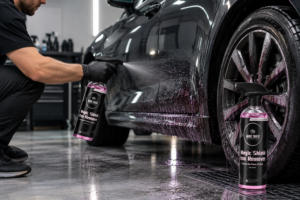
How to Remove Water Spots from Car Paint: Step by Step
The safest approach is to start with cleaning and only move to stronger methods if basic cleaning is not enough.
Step 1: Park in the Shade. Let the Paint Cool
Start by parking your vehicle in a shaded and well‑ventilated area.
If the car has been sitting in the sun, allow the paint to cool before applying any cleaning product. Hot panels cause products and water to dry quickly, which can make water spots worse and increase the risk of residue.
Avoid cleaning your car during the part of the day whenever possible.
Step 2: Wash the Car
Before treating individual water spots, remove loose dirt and road grime.
Use a car shampoo for automotive paint, a clean wash mitt, and plenty of rinse water. Work from the panels downward, keeping washing materials clean.
Never try to scrub water spots out of a dirty panel. Loose grit can scratch the finish when dragged across the surface.
If you need a refresher on paint cleaning, read our guide on how to remove water spots from car paint, which explains why proper washing and preparation matter before paint correction.
Step 3: Dry the Paint with a Clean Microfiber Towel
After rinsing, dry the vehicle promptly using a soft microfiber drying towel.
Use pressure and avoid dragging a visibly dirty towel across the paint. Check whether the water spot marks disappear as the surface dries.
If the water spots are gon,e you may have been dealing with residue. If the water spots remain, move on to a targeted approach rather than repeating the same wash over and over.
Step 4: Treat Mineral Deposits with the Right Product
For water spots that remain after washing, choose a dedicated automotive water spot remover designed for yourvehicle’ss surface.
Read the label carefully. Not every cleaner is suitable for every paint finish, glass surface, trim material, or protective coating.
Apply the product according to its directions, starting with a test area. Observe the dwell time and rinse or wipe it away exactly as instructed.
Do not allow a chemical product to dry on the paint unless its manufacturer explicitly directs you to do so
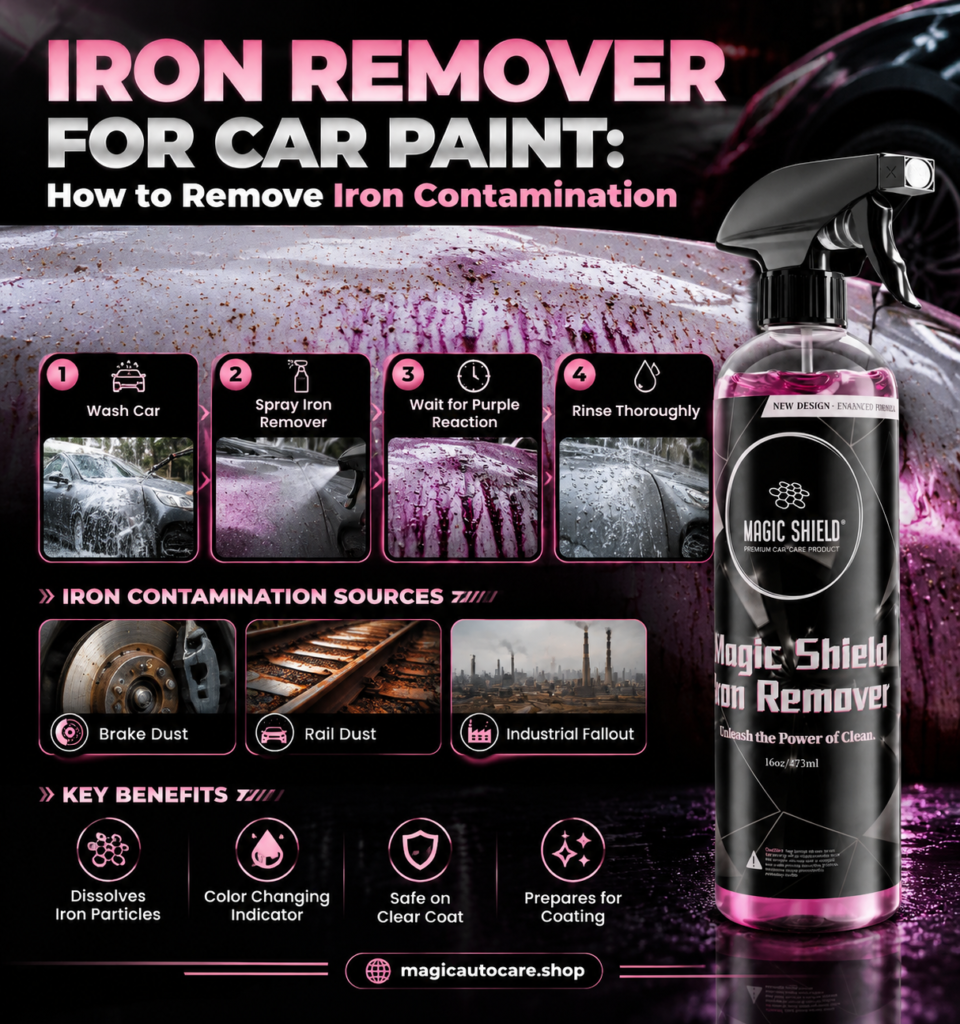
Also avoid assuming that an iron remover will solve every water spot problem. Iron removers are designed to target iron contamination, such as embedded particles from brake dust and industrial fallout. They are not a replacement for a dedicated mineral deposit remover.
If your vehicle has types of contamination, our guide to iron remover for car paint can help you understand when iron decontamination may be useful.
Step 5: Check Whether the Surface Needs Decontamination
After washing and treating mineral residue, inspect the paint again.
Does the surface still feel rough because of embedded particles? How to remove water spots from car paint. If so, bonded contamination may be part of the problem. It is not necessarily the water spots themselves.
A clay bar can help remove contaminants that remain bonded to the paint after washing. It should be used with lubricant, light pressure, and a clean clay surface.
Explore the Magic Shield Clay Bar Kit if your paint needs this type of decontamination.
Keep in mind that clay does not repair etching, scratches, or clear‑coat damage. Incorrect use can also cause light marring,g so do not use it as a substitute for a water spot remover.
Step 6: Consider Polishing Only If the Marks Remain
If the paint is clean but the water spot marks are still visible,le they may be etched into the coat.
Paint polishing can sometimes remove shallow defects by carefully refining the affected surface. However, polishing removes an amount of clear coat, so it should not be the first step for every water spot.
Before polishing:
Make sure the paint is clean and free of grit.
Inspect the area under good lighting.
Start with the aggressive, suitable polishing method.
Test an area before treating an entire panel.
Avoid polishing if the clear coat is peeling, failing, or unusually thin.
For surface imperfections,s a suitable one‑step polish may be enough. Deeper etching can require a specialized correction process,ss and some damage cannot be safely polished away.
If you are unsure about the depth of the how to remove water spots from car paint, consult a qualified paint‑correction professional rather than repeatedly increasing the polishing pressure or abrasiveness.
Step 7: Protect the Paint After Cleaning
Once the water spots have been removed and the finish is in good condition, consider applying an appropriate wax, sealant, or ceramic coating.
Protection helps washing easier and helps water come off the surface. However,r no coating makes paint completely immune to mineral deposits or etching.
If you plan to apply a coating, follow the preparation instructions carefully. The surface may need cleaning and preparation before the coating is applied.
What Should You Never Use to Remove Water Spots?
When water spots refuse to disappear, many people feel tempted to use chemicals or household remedies. This can be risky for modern automotive finishes.
– Household abrasive cleaners: Scouring powders and rough cleaning pads can scratch the clear coat.
– Steel wool or rough scrubbers: These can leave scratches that are more noticeable than the original water spots.
– Undiluted household chemicals: Products not intended for finishes may damage paint, trim, or protective coatings.
– Aggressive polishing without inspection: Removing too much clear coat can permanently compromise the finish.
– Repeated dry rubbing: Friction against a dry or contaminated surface can create fine scratches and swirl marks.
– Mixing cleaning chemicals: Combining products can create reactions and unpredictable results.
Be especially cautious with vinegar-based DIY remedies. Although acidic solutions can dissolve mineral deposits, their suitability depends on the surface, concentration, contact time, and protective coating.
A dedicated automotive product, with usage instructions,s is generally the more controlled option.
The safest rule is simple: identify the problem first, then use a product designed for that problem, and follow its directions.
How to Prevent Water Spots from Returning
Removing existing water spots is half the job. A few simple changes to your washing routine can reduce the chances of seeing them
Wash and dry your car in the shade
Whenever possible, wash the vehicle when the panels are cool. Work in sections and dry the paint before rinse water evaporates on its own.
Use washing materials
A clean wash mitt and microfiber drying towel help reduce the risk of dragging grit across the finish. Replace dirty towels rather than continuing to use them.
Avoid letting sprinkler water dry on the paint
If your vehicle is parked near a lawn sprinkler, reposition it when possible. Sprinkler overspray can leave mineral deposits, especially when the water contains high mineral levels.
Use car-care products
Choose automotive shampoos and surface cleaners that are appropriate for your vehicle’s finish. Household dishwashing products and random cleaning chemicals are not substitutes for a proper car-care routine.
Maintain your coating correctly
A ceramic coating can improve water behavior and make maintenance easier,r but it does not prevent every water spot.
Follow the coating manufacturer’s washing and maintenance recommendations. How to remove water spots from car paint:t Remove mineral residue promptly. Avoid allowing standing water to dry repeatedly on the surface.
For information, read our complete guide to ceramic coating maintenance.
Inspect the paint regularly
Checking the vehicle after washing makes it easier to notice spots before they become a persistent problem. Early treatment is usually simpler than correcting etched marks.
Can Ceramic Coating Prevent Water Spots?
Ceramic coatings can help water move across the surface. They may make some contaminants easier to remove. That is useful for maintenance, but it is not complete protection against water spotting.
Mineral-rich water can still leave deposits on a vehicle. If droplets remain on the surface and evaporate,e the minerals may be left behind.
In some conditions, concentrated mineral deposits can even etch the coating. This can affect the finish beneath it.
To maintain a car:
Wash it regularly using compatible car-care products.
Dry it properly after rinsing.
Avoid allowing sprinkler water or mineral-rich rinse water to dry on the panels.
Follow the coating manufacturer’s maintenance instructions.
Treat spots with a compatible product rather than using random chemicals.
A maintained coating can make car care easier, but good washing and drying habits still matter.
FAQ’s
1. Can water spots be removed from car paint?
Yes, many water spots can be removed. Fresh mineral deposits may come off with a wash, while stubborn deposits may need a dedicated automotive water spot remover. Etched marks can require paint polishing or professional correction.
2. Does car shampoo remove water spots?
Car shampoo can remove residue and ordinary dirt, but it may not dissolve stubborn mineral deposits. If spots remain after a wash,h identify the cause before choosing another product.
3. Will a clay bar remove water spots?
A clay bar can remove bonded surface contaminants,ts but it is not designed to repair etched paint. Use it with suitable lubricant and light pressure. A dedicated mineral deposit remover may be more appropriate for water spots.
4. Can polishing remove water spot etching?
Polishing can improve some water spot etching by refining the clear coat. Deep defects may not be safely removable through polishing. The paint should be inspected before attempting correction.
5. Are water spots permanent?
Not always. Surface deposits are often removable. Prolonged exposure can cause etching that is harder to correct. Severe clear-coat damage may be permanent without refinishing.
6. Why does my car have water spots after washing?
Minerals in the rinse water may remain on the paint when the water evaporates. Washing in sunlight, using hard water, or leaving the car to air-dry can increase the likelihood of spotting.
7. Can water spots damage ceramic coating?
Yes. Mineral deposits can build up on coated paint, and prolonged exposure may lead to spotting or etching. Proper washing, drying, and coating maintenance help reduce this risk.
8. What is the safest way to remove old water spots?
Start with a wash and inspect the paint. If mineral deposits remain, use a dedicated water spot remover according to its instructions. If the marks appear etched into the coat, seek professional advice before attempting paint correction.