Graphene vs Ceramic Coating: Which Is Better for Your Car?
Short answer: A graphene coating is not automatically better than a ceramic coating. Many products sold as “graphene coatings” are ceramic-style paint coatings that include graphene-derived additives. The smarter comparison is the…
Short answer: A graphene coating is not automatically better than a ceramic coating. Many products sold as “graphene coatings” are ceramic-style paint coatings that include graphene-derived additives. The smarter comparison is the exact product: its preparation requirements, application method, cure time, verified durability, water behavior, surface compatibility and after-sale support.
Updated August 30, 2026. This guide separates useful buying criteria from marketing language so you can choose the right protection for your vehicle.
Graphene vs ceramic coating: the key takeaways
- Both can add gloss, water repellency, easier cleaning and resistance to common environmental contamination.
- Neither coating makes paint scratch-proof or protects against stone chips like paint protection film can.
- The word “graphene” does not guarantee a specific concentration, chemistry or performance level.
- Preparation, application, curing and maintenance can matter as much as the coating label.
- For a first DIY coating, clear instructions and manageable working time are usually more valuable than the most aggressive marketing claim.
What is a ceramic coating?
A ceramic coating is a liquid paint-protection product designed to cure into a thin, bonded layer on a properly prepared surface. Depending on the formula, it can improve gloss, make water bead or sheet more readily, and help road film release more easily during washing.
A ceramic coating is a sacrificial surface layer, not body armor. It can help reduce the effort needed to maintain the finish, but it cannot stop deep scratches, dents or rock chips. Drivers whose main concern is physical impact protection should compare coatings with paint protection film rather than expecting a coating to do both jobs.
What is a graphene coating?
In automotive detailing, “graphene coating” usually refers to a ceramic or polymer coating that contains graphene-related additives. The base chemistry, amount and role of those additives vary by manufacturer. It is therefore more accurate to evaluate the complete formula and instructions than to assume every graphene-labelled product performs the same way.
A graphene label also does not mean the vehicle receives a thick sheet of pure graphene. It remains a very thin protective coating whose real-world result depends on the product, the paint condition and the application process.
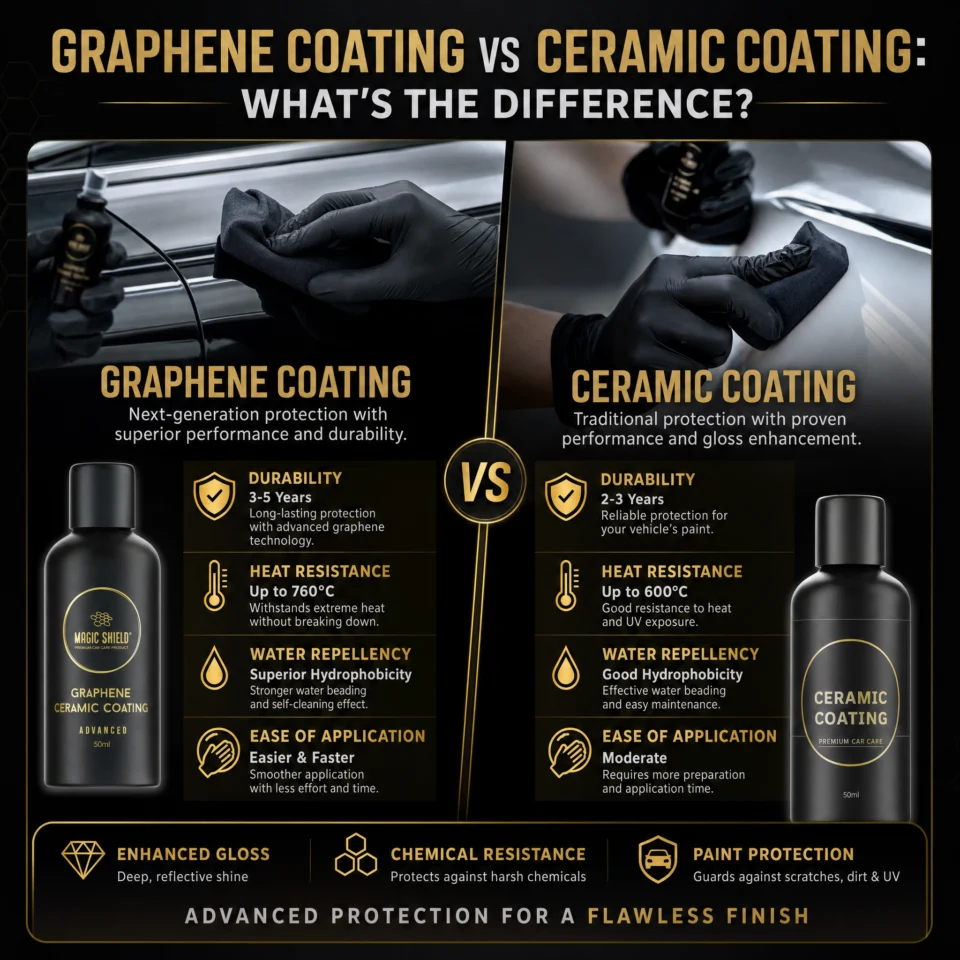
Graphene vs ceramic coating comparison
| Buying factor | Ceramic coating | Graphene-labelled coating |
|---|---|---|
| Typical chemistry | Ceramic or ceramic-polymer paint coating | Usually a ceramic or polymer base with graphene-related additives |
| Gloss | Can create a deep, reflective finish when the paint is prepared correctly | Can also create strong gloss; the final result depends on formula and preparation |
| Water behavior | Commonly designed for beading or sheeting | Commonly designed for beading or sheeting; the label alone does not predict the result |
| Durability | Varies widely by product, environment and care | Also varies widely; “graphene” alone is not a durability rating |
| Water spots | Hydrophobic behavior can help, but dried mineral deposits can still form | Can still develop water spots; prompt drying and maintenance remain important |
| Application | Available as easy sprays and longer-term liquid coatings | Also available in spray and longer-term liquid formats |
| Impact protection | Not a substitute for paint protection film | Not a substitute for paint protection film |
Is graphene coating better than ceramic coating?
Not automatically. A well-documented graphene coating may be a good choice, but a proven ceramic coating with clear instructions, realistic durability guidance and dependable support can be the better purchase. There is no universal winner based only on the category name.
Choose the product whose instructions match your experience, workspace and maintenance habits. If two products make similar promises, favor the one that clearly explains preparation, temperature range, working time, cure conditions, coverage and compatible aftercare.
Which coating lasts longer?
The label cannot answer that question by itself. Coating life is influenced by paint preparation, application consistency, curing conditions, climate, mileage, washing technique, chemical exposure and whether compatible maintenance products are used. A carefully applied ceramic coating can outlast a poorly applied graphene-labelled product, and the reverse can also be true.
Read how long ceramic coating lasts for a closer look at the factors that shorten or extend service life.
Does graphene coating prevent water spots?
No coating makes a vehicle immune to water spots. Hydrophobic surfaces can make water easier to remove, but droplets may still leave minerals behind when they dry. Rinse away hard water promptly, dry the vehicle instead of letting droplets evaporate, and use products confirmed as compatible with the coating.
Which coating is easier for a beginner?
A spray coating is generally the easiest entry point because it normally requires less leveling and has a shorter learning curve. A longer-term liquid coating can still be DIY-friendly when the instructions are specific and the installer has enough time for decontamination, paint preparation, application and curing.
Before choosing, compare the full process in this step-by-step ceramic coating application guide. If the preparation and cure requirements do not fit your workspace, choose a simpler format or use a professional installer.
Is graphene coating better for black cars?
Not simply because the paint is black. Dark paint makes swirls, high spots and residue easier to see, so paint correction, lighting and careful leveling become especially important. Formula quality and application skill are more useful decision factors than the word graphene. See the guide to choosing a ceramic coating for black cars for dark-paint considerations.
Eight questions to ask before buying either coating
- What format is it? A spray protectant and a longer-term liquid coating require different preparation, application and upkeep.
- How is durability described? Look for clear conditions and care requirements, not an isolated number.
- What preparation is required? Washing, decontamination, polishing and panel preparation may all affect bonding.
- What is the working time? You need enough time to apply and level the product before it becomes difficult to remove.
- What are the cure requirements? Check temperature, humidity, water exposure and wash restrictions before starting.
- Which surfaces are compatible? Confirm paint, trim, glass and wheel use instead of assuming one bottle is suitable everywhere.
- How much area will it cover? Compare bottle size with the vehicle size and the recommended number of layers.
- What support is available? Detailed instructions and responsive help reduce avoidable DIY mistakes.
Where the Magic Shield graphene ceramic coating fits
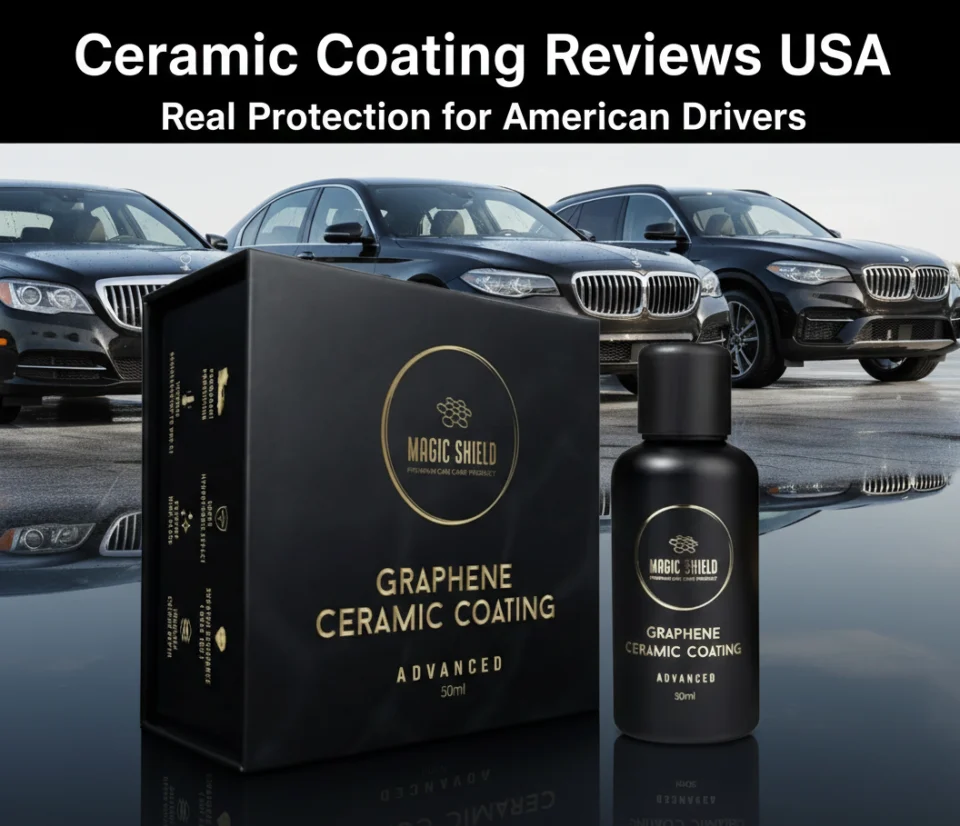
The Magic Shield Graphene Ceramic Coating is a 50 mL DIY kit. The current product information describes durability of up to five years when the surface is prepared correctly and the coating is applied and cared for as directed. The kit includes the coating, an applicator, a microfiber towel, gloves and an application guide.
It is a practical candidate for owners who want a longer-term liquid coating and are willing to complete the preparation and cure process. Follow the current product label and guide; the published instructions include keeping the vehicle dry for the initial cure period and avoiding washing during the longer cure window. Apply only to clean, cool panels out of direct sunlight.
A reliable six-step application sequence
- Wash thoroughly. Remove loose dirt with a coating-safe wash process.
- Decontaminate the paint. Remove bonded contamination so it is not trapped beneath the coating.
- Correct and inspect. Polish visible defects if required, then inspect under strong, even lighting.
- Prepare the panel. Remove polishing oils and residue with the process specified by the coating manufacturer. A dedicated ceramic coating prep spray can help when it is compatible with the system.
- Apply and level in small sections. Work on cool, dry paint in the shade and follow the product’s timing rather than using a universal wipe-off time.
- Protect the cure. Keep the coating away from water and washing for the stated periods, then begin a compatible maintenance routine.
How to maintain graphene or ceramic coating
- Use a gentle hand-wash method and a coating-compatible shampoo.
- Avoid automatic brush washes that can introduce swirls.
- Dry the vehicle instead of allowing mineral-rich water to evaporate.
- Remove bird droppings, bug residue and other contamination promptly.
- Do not stack waxes, sealants or boosters unless compatibility is confirmed.
- Judge coating condition by cleaning behavior and water response, not by beading alone.
- Inspect high-wear areas regularly and follow the manufacturer’s maintenance schedule.
Common coating mistakes to avoid
- Applying over dirty, oily or contaminated paint
- Using too much product and leaving high spots
- Working on hot panels or in direct sunlight
- Rushing the leveling step or using a universal flash time
- Exposing the coating to water or washing it before the cure is complete
- Combining products without checking compatibility
- Expecting either coating to prevent every scratch, chip or water spot
The simplest decision rule
Choose a graphene-labelled coating when the exact product has credible instructions, realistic claims and a process that fits your needs. Choose a conventional ceramic coating when it offers clearer documentation, easier application or better support. Choose a spray format when speed and simplicity matter more than maximum service life. Choose paint protection film when stone-chip and impact protection are the priority.
Frequently asked questions
Is graphene coating better than ceramic coating?
Not automatically. Many graphene-labelled coatings use a ceramic or polymer base with graphene-related additives. Compare the exact formula, preparation, application, cure requirements, verified durability and support instead of choosing by the label alone.
How long does graphene coating last?
Service life depends on the product, preparation, application, climate, mileage and maintenance. The Magic Shield Graphene Ceramic Coating is described as lasting up to five years when it is prepared, applied and cared for correctly.
Can you apply graphene coating over ceramic coating?
Only when the manufacturers confirm compatibility. An existing coating can interfere with bonding, so do not stack products without checking the instructions for both systems.
Which coating is easiest for a beginner?
A spray coating is generally the easiest place to start. A longer-term liquid ceramic or graphene-labelled coating can also be DIY-friendly when it includes clear instructions and the installer can complete the preparation and cure process.
Are graphene or ceramic coatings scratch-proof?
No. They can provide a sacrificial surface and make maintenance easier, but they do not stop deep scratches or stone chips. Paint protection film is designed for greater physical impact protection.
Do graphene coatings prevent water spots?
No coating makes paint immune to water spots. Prompt rinsing, careful drying and compatible maintenance are still required because mineral deposits can remain when water evaporates.
Related ceramic coating guides
- How to apply ceramic coating: step-by-step DIY guide
- How long does ceramic coating last?
- What is nano ceramic coating?
- Spray-on ceramic coating for cars
- Ceramic coating considerations for black cars
Ready to compare the product with your vehicle and workspace? Review the complete Magic Shield Graphene Ceramic Coating kit, including its current preparation, application and cure instructions, before starting.