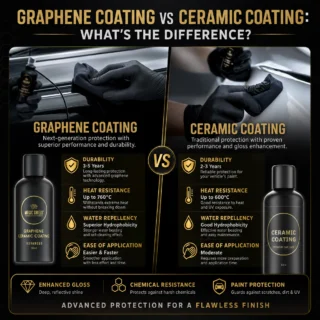
0 on Graphene vs Ceramic Coating: Which Is Better for Your Car?
Short answer: A graphene coating is not automatically better than a ceramic coating. Many products sold as “graphene coatings” are ceramic-style paint coatings that include graphene-derived additives. The smarter comparison is the exact product: its preparation requirements, application method, cure […]
After washing and drying, place your hand inside a clean plastic bag and lightly glide it over the paint. The bag amplifies tiny bumps, revealing bonded contamination a normal wash leaves behind.
Feel for grit, bumps or a sandpaper-like texture
Clay only the areas that still feel contaminated
Re-test after claying for a noticeably smoother finish
The bag does not clean the paint; it simply makes small bonded particles easier to feel.
Match the grade to the job
Start gentle. Step up only when needed.
The safest approach is the least aggressive grade that removes the contamination. Test a small, inconspicuous area first, especially on soft or dark paint.
LightMaintenance and lighter bonded contamination
MediumTypical road film, fallout and moderate buildup
HeavyStubborn buildup; polishing may be needed afterward
Controlled claying
Lubrication is your safety system.
Clay should glide, not grab. Work in the shade on cool, freshly washed paint and keep the panel generously wet with a compatible clay lubricant.
01
Wash and cool the surfaceRemove loose grit before the clay ever touches paint.
02
Flatten a clean clay faceUse a manageable piece and protect the unused clay.
03
Lubricate generouslyKeep the working area wet enough for effortless glide.
04
Use light, straight passesFold to a clean face often; discard clay immediately if dropped.
Choose your configuration
A complete first kit or a clay-only refill.
Both options include light, medium and heavy clay grades. Choose the complete kit when you also need dedicated lubrication and a microfiber towel.
Best for first-time claying
Clay Bar Kit + GlideTech
$18.99
Three 100 g clay grades, 16 fl oz GlideTech lubricant and a microfiber towel in one ready-to-use setup.
Clay-only refill
Triple Clay Bar Pack
$12.99
Three 100 g clay grades for detailers who already have a compatible dedicated clay lubricant.
Build a better foundation
Clay fits into a complete decontamination process.
Claying is the mechanical step. For best results, remove loose dirt and chemical contamination first, then finish with the protection of your choice.
STEP 01
Wash
Remove loose dirt and road film.
STEP 02
Iron remover
Dissolve embedded ferrous particles.
STEP 03
Clay
Lift remaining bonded contamination.
STEP 04
Inspect & prep
Polish if needed, then clean the surface.
STEP 05
Protect
Apply wax, sealant or coating.
What washing leaves behind
Remove the contamination you can feel.
A normal wash handles loose soil. Clay targets the bonded residue that remains attached to the surface, helping restore a cleaner, smoother foundation.
Paint oversprayFine airborne paint that settles and bonds to exterior surfaces.
Tree-sap residueStubborn traces left after the bulk of the sap has been safely removed.
Tar specksSmall road deposits that remain after a thorough wash.
Bonded falloutEmbedded environmental particles that make clean paint feel gritty.
Protect the finish while you work
A clean clay face is a safer clay face.
The clay traps the contamination it removes. Inspect it often, fold the dirty face inward and keep unused clay sealed so every pass starts as clean as possible.
Fold and knead frequently to expose clean material
Store unused clay in its case away from dust and grit
Discard immediately if dropped on the floor
Inspect under good light before polishing or protection
Safety first
Small habits protect the finish.
Use only on cool, freshly washed paintKeep every pass generously lubricatedFold often to expose a clean clay faceDiscard the clay immediately if it is dropped
Which option should I choose?
Choose the complete kit if you need both clay and a dedicated lubricant. Choose the Triple Clay Bar Pack when you already have a compatible clay lubricant.
Can a clay bar mar paint?
Yes, poor technique or an aggressive grade can leave light marring. Start with the lightest grade that works, use generous lubrication, test first and apply only light pressure.
How often should I clay?
Clay when clean paint still feels rough or before polishing and protection. It is a decontamination step, not something required at every wash.
What should I do after claying?
Inspect the paint under good light. Polish if needed, wipe the surface clean, then apply your chosen wax, sealant or ceramic/graphene protection.
Ready for truly smooth paint?
Choose your kit above, then add it to the cart.
500 mLconcentrated maintenance wash
pH neutralsafe for coatings and waxes
Graphene + SiO₂supports gloss and slickness
4.98 / 5from 158 customer reviews
Coating-safe wash care
Clean deeply without stripping the finish.
Graphene Shampoo combines high-lubricity foam with a pH-neutral formula designed for routine washing. It lifts road film while helping coated, waxed, and clear-coated surfaces retain gloss and hydrophobic behaviour.
Rich foam helps reduce wash friction
Rinses clean for a streak-free finish
Works by bucket or foam cannon
Why drivers switch
Less friction. More finish.
Three practical benefits for weekly maintenance and pre-coating preparation.
Protection stays protected
A balanced formula cleans without aggressively stripping waxes, sealants, or ceramic protection.
Gloss support in every wash
Graphene and SiO₂ help the surface feel slicker and look freshly detailed after rinsing and drying.
A faster maintenance routine
Dense foam, easy rinsing, and a clean finish reduce the need for extra gloss products after every wash.
Simple wash routine
Four controlled steps.
Use on a cool surface out of direct sunlight. Never allow shampoo to dry on the vehicle.
01
Pre-rinseRemove loose grit from the body, wheels, and lower panels.
02
Foam or bucket washDilute according to the label and wash from the top down.
03
Rinse thoroughlyFlush away foam before it can dry on paint or glass.
04
Dry safelyUse a clean drying towel to reveal the slick, glossy finish.
What to expect
A cleaner surface with restored visual depth.
On properly maintained paint, the wash removes traffic film and residue that mute reflections. The result is a cleaner, slicker surface with more visible colour depth.
High foammore lubrication during contact washing
Clean rinseless residue left behind
Coating safebuilt for ongoing maintenance
Multi-vehiclecars, bikes, RVs, and boats
Perfect for
Routine care and coating preparation
Maintaining ceramic-coated or waxed vehicles
Weekly or bi-weekly contact washes
Foam-cannon and bucket washing
Paint, glass, wheels, and exterior trim
Use another product when
The contamination needs specialty chemistry
Heavy tar, iron fallout, or bonded contamination
Oxidized paint that needs polishing or correction
Hot panels or direct sunlight
Interior fabrics or porous unfinished surfaces
Questions, answered
Wash with confidence.
Will it strip my ceramic coating?
The pH-neutral formula is designed for coating-safe maintenance. Follow the dilution and washing directions on the label.
Can I use it in a foam cannon?
Yes. It works in a foam cannon or a traditional wash bucket. Adjust the dilution to your equipment and the level of soil.
Does it replace a ceramic coating?
No. It is a maintenance shampoo that supports gloss and hydrophobic performance; it does not replace a bonded ceramic coating.
Can I use it on an uncoated vehicle?
Yes. It can be used on clear-coated paint, waxes, sealants, glass, wheels, and exterior trim.
Can it remove tar or iron fallout?
Use a dedicated tar remover or iron remover for heavy bonded contamination, then wash the vehicle normally.
Ready for a cleaner, slicker wash?
Select your quantity above and check out securely with free U.S. shipping.
Washing removes dirt. Prep Spray targets the invisible layer left behind—polishing oils, wax residue, fingerprints, and surface film that can interfere with ceramic or graphene coating adhesion.
Fast spray-and-wipe application
Designed for paint, glass, chrome, and wheels
Leaves the surface ready for your chosen protection
Real-world application
Spray. Wipe. Inspect.
A simple, controlled wipe-down creates the clean foundation your coating needs.
Professional surface prep, made approachableApply evenly on a cool, dry panelWipe clean with a fresh microfiber towel
What the final wipe removes
The contamination you cannot always see.
01
Polishing oils
Clears lubricants and fillers left after paint correction so the true finish is exposed.
02
Wax and sealant residue
Removes lingering protection that can prevent a new coating from meeting the paint evenly.
03
Fingerprints and surface film
Lifts light handling residue and oily film before the coating applicator touches the panel.
A controlled prep routine
Four steps to coating-ready paint.
Work in the shade on a cool, dry surface. Use clean towels and change sides often.
01
Wash and decontaminateRemove loose dirt, iron fallout, and bonded contamination first.
02
Cool and dry the panelDo not apply on hot paint or in direct sunlight.
03
Spray a small working areaUse a controlled mist and avoid allowing the product to dry.
04
Wipe, flip, and inspectBuff with a clean microfiber side until the finish is clear and streak-free.
Where Prep Spray fits
Build the surface-preparation sequence.
Each step has a different job. Prep Spray is the final cleaning stage immediately before protection.
Step 1
Iron removal
Dissolve embedded metallic fallout and brake-dust contamination.
Strong surface preparation deserves a controlled process.
Follow the product label. Work with ventilation, keep the bottle away from heat and flame, and test an inconspicuous area when you are unsure about a surface.
Cool exterior surfaces onlyUse out of direct sunlightKeep away from heat and flameNot intended as an interior cleaner
Questions, answered
Prep with confidence.
Does Prep Spray replace washing or decontamination?
No. Wash and decontaminate the vehicle first. Prep Spray is the final wipe that removes remaining oils, wax residue, and light surface film before protection.
When should I use it?
Use it after paint correction or decontamination and immediately before applying a ceramic coating, graphene coating, sealant, or wax.
Can I use it on glass, chrome, or wheels?
It is designed for exterior paint, glass, chrome, and wheels. Always work on a cool surface and test first when the material or finish is unfamiliar.
Should I spray the whole vehicle at once?
No. Work one small section at a time and wipe before the product dries. This gives you better control and helps prevent streaking.
Can I use it in direct sunlight?
No. Use it in the shade on cool, dry panels and follow all instructions and safety warnings on the label.
Start your coating with a clean foundation.
Select your quantity above and check out securely with free U.S. shipping.
GlideTech optiondedicated lubricant for controlled gliding
4.75 / 5from 117 customer ratings
Mechanical decontamination
Paint can look clean and still feel rough.
Normal washing removes loose dirt, but bonded contamination can remain attached to paint and glass. A properly lubricated clay bar lifts that embedded grit so the surface feels smoother before polishing, sealing, or coating.
Targets bonded contaminants washing leaves behind
Helps restore a smooth, uniform surface feel
Prepares paint for the next correction or protection step
Real-world clay treatment
Lubricate. Glide. Inspect.
Good clay work is controlled and gentle—never dry, rushed, or forced.
A complete decontamination setupKnead into a clean, flat working padUse light pressure on a wet, lubricated panel
What clay can remove
Bonded contamination that resists a normal wash.
01
Environmental fallout
Lift embedded grit and airborne contamination that settles into the surface over time.
02
Fine overspray and residue
Remove small bonded particles and stubborn surface film after the vehicle has been washed.
03
Remaining road contamination
Address rough spots that remain after chemical decontamination and contact washing.
A controlled clay routine
Four steps to a smoother surface.
Work in the shade on cool, freshly washed paint. Keep the surface generously lubricated.
01
Wash and rinse thoroughlyNever use clay to remove loose dirt from an unwashed vehicle.
02
Knead a clean working faceFlatten a manageable piece and keep unused clay protected.
03
Lubricate and glideUse short straight passes with light pressure. Add lubricant whenever the clay begins to drag.
04
Inspect, fold, and wipeFold contamination inward, expose a clean face, then wipe the panel dry and inspect it.
Choose your configuration
The complete kit or clay-only replenishment.
Best for first-time buyers
Clay Bar Kit with GlideTech Spray
The ready-to-use route when you need both the clay media and dedicated surface lubrication.
Clay bars for different contamination levels
GlideTech lubricant spray included
Complete setup for a controlled clay treatment
Clay-only option
Triple Clay Bar Pack
A practical refill when you already have a compatible clay lubricant and need fresh clay media.
Three clay grades
Compact storage cases
Choose the grade that matches the surface condition
Match the clay to the job
Start gentle. Step up only when needed.
Always test an inconspicuous area first. Softer paint may require polishing after any mechanical decontamination.
Light · Yellow
For well-maintained finishes, soft paint, and light bonded contamination.
Medium · Blue
For routine decontamination when a light grade does not fully smooth the panel.
Heavy · Gray
For stubborn contamination. Test carefully and expect that follow-up polishing may be appropriate.
Where clay fits
Build the surface-preparation sequence.
Chemical and mechanical decontamination do different jobs. Use only the steps your vehicle needs.
Step 1
Iron removal
Dissolve metallic fallout before using mechanical clay treatment.
Clay must glide over the surface on a film of compatible lubricant. Stop if it drags, keep the working face clean, and discard any clay that falls onto the ground.
Never clay a dry or dirty panelUse light pressure and straight passesFold contamination away from the surfaceDiscard clay immediately if dropped
Complete the wash and clay pair
Save 10% with Graphene Shampoo.
Add Graphene Shampoo and this Clay Bar Kit to the cart together. The qualifying bundle saving is calculated automatically—no coupon code needed.
After washing, place your hand inside a clean plastic bag and gently feel the paint. A gritty or rough texture indicates bonded contamination may still be present.
Can a clay bar scratch paint?
Incorrect use can cause marring. Always work on a washed, cool panel with generous lubricant, light pressure, and a clean clay face. Test first, especially on soft or dark paint.
How often should I clay my vehicle?
Only when bonded contamination is present. Many vehicles need it seasonally or before polishing and coating, but usage depends on storage, climate, and driving conditions.
Can I use clay on glass or wheels?
Clay can be used on suitable exterior glass and coated wheel surfaces with proper lubrication. Use separate clay for dirtier areas such as wheels and test unfamiliar finishes first.
What should I do after claying?
Inspect the finish. If protection will be applied, use Prep Spray for the final surface wipe, then apply the chosen wax, sealant, or coating.
Turn rough paint into a coating-ready surface.
Choose the complete kit or triple clay pack above.
Keep your selected Clay Bar option and add the products that handle loose dirt and metallic fallout. Your saving is applied automatically in the cart.
Real decontamination you can feel with your hand.Customer-tested routine
From our customers
Smoother paint. More confident detailing.
Customers notice the difference before they even step back to admire the shine: bonded grit is gone and the surface feels ready for polishing or protection.
“This is the most satisfying step in detailing. Seeing the white clay turn brown lets you know it’s working. My car shines so much brighter now because the surface is truly clean.”
★★★★★
“I have a black BMW 5 Series, so I’m terrified of scratches. I used the Yellow bar with GlideTech spray. Zero marring—it lifted the dirt and left the paint perfect.”
★★★★★
“The spray nozzle was a little hard to twist open, but once it started working, it misted fine. The clay bars are excellent—very pliable once you knead them a bit.”